How to Find the Best Pet Product Manufacturer & Cut Tariffs by 20%

Looking to source pet products and avoid high tariffs? Discover which pet product manufacturers in Southeast Asia can cut your import duties by up to 20% — legally.

How to Find the Best Pet Product Manufacturer & Cut Tariffs by 20% (2026 Guide)

Which pet product factories can help me avoid high tariffs?

Factories in Vietnam, Thailand, and Mexico offer the strongest tariff advantages for U.S. importers in 2026. Vietnam avoids Section 301 surcharges entirely on most pet product categories; Mexico qualifies for zero-tariff USMCA access. A certified pet product manufacturer using HTS code engineering can further reduce effective duty rates by 8-15 percentage points regardless of country of origin.

When looking for a reliable pet product manufacturer, most B2B buyers focus only on FOB prices. That’s the mistake that ends up costing them the most.

Here’s what actually happens. You find a factory at $12.50 FOB. Your competitor is paying $13.80 FOB from a different pet product manufacturer in Vietnam. You feel good about that $1.30 advantage. Then your shipment clears customs and you realize you just paid 23.2% duty on a cat tree while your competitor paid 3.2%. They beat you on landed cost by $3.70 a unit despite the higher factory price.

That gap is the tariff problem. And it’s entirely solvable — not through shortcuts, but through understanding which pet product sourcing decisions have the biggest impact on total landed cost.

This guide covers exactly that: which manufacturers and countries reduce your tariff exposure the most in 2026, seven legal strategies to cut duties further, and the real math behind the decisions that separate profitable importers from ones quietly losing margin on every container.

A B2B case study showing an 18% tariff reduction and 28% total landed cost savings through smart pet product sourcing wholesale optimization.

What Makes a Pet Product Manufacturer Ideal for Tariff-Aware Importers?

Not every pet product manufacturer thinks about your U.S. customs bill. Most are focused on production cost and lead time. The ones worth working with think about total landed cost — and that requires a specific set of capabilities.


Capability

What It Means

Why It Matters

HTS code engineering

Factory can advise on product design choices that affect tariff classification

A single reclassification can drop your effective duty rate by 8-15 points

Multi-country sourcing

Operates facilities in Vietnam, Mexico, or Thailand alongside China

Lets you shift production to lower-tariff origins when Section 301 makes China expensive

First Sale documentation

Maintains complete audit trail for multi-tier supply chains

Enables First Sale valuation, reducing dutiable value by 10-20%

BSCI / ISO 9001 certified

Holds current compliance documentation

Required for retail buyers; also required for CBP compliance in sensitive HTS categories

Packaging optimization

Designs for maximum CBM efficiency

Reduces ocean freight cost per unit by 20-40% on bulky pet products


The capability that most importers overlook is the first one: HTS code engineering. This is not about misclassification. It is about designing your product so that it legally falls under the most favorable HTS code available. A cat tree built primarily from fabric-covered steel panels classifies differently than one built from compressed wood fiber. Same product function. Potentially 12 percentage points of tariff difference.

Which Pet Product Factories Can Help Me Avoid High Tariffs? (Country-by-Country Guide)

Which countries offer favorable tariff policies for pet products?

For U.S. importers in 2026: Vietnam (no Section 301 surcharge on most pet categories, 14-18 day transit), Mexico (zero duty under USMCA, 2-5 day truck transit), Thailand (no Section 301, competitive textile manufacturing). China remains dominant for complex OEM but requires HTS optimization to manage Section 301 exposure of 7.5-25%.

Vietnam — The Primary Alternative for Tariff-Sensitive Categories

Most U.S. importers searching for benefits of sourcing pet products outside China end up looking at Vietnam first. And for good reason.

Vietnam’s manufacturing base for pet textiles and accessories has grown substantially since 2019. The country is not subject to Section 301 tariffs on most pet product categories, which means you’re looking at base HTS rates (typically 7-14% for pet beds, carriers, and apparel) rather than base plus a 7.5-25% surcharge. On a $500,000 annual import program in pet textiles, that difference can reach $80,000-$120,000 per year.

The honest limitation: Vietnam’s pet product manufacturing depth is shallower than China for complex, multi-component products. You’ll find strong capability in basic textile goods — pet beds, blankets, carriers. For precision-engineered items like automatic litter boxes or smart feeders, China still dominates on both capability and tooling infrastructure.

  • Best for: Pet beds, blankets, carriers, plush toys, basic apparel
  • Tariff advantage: Avoids Section 301 entirely on most categories
  • Key caution: CBP actively investigates transshipment fraud. Require genuine Certificate of Origin documentation. Work only with verified manufacturers, not trading companies.

Mexico — The Nearshoring Play for Specific Categories

Under USMCA, qualifying goods manufactured in Mexico enter the U.S. duty-free. Combined with 2-5 day truck transit times versus 14-18 days by ocean from Vietnam, Mexico makes compelling economic sense for product categories requiring frequent restocking or rapid response to seasonal demand.

The current reality of Southeast Asia pet product manufacturing versus Mexico: Mexico’s pet manufacturing infrastructure is thinner. You’ll find good capability for basic plastic accessories and pet apparel; you won’t find the OEM depth China and Vietnam offer for complex designs. Nearshoring makes sense for your simpler, higher-volume SKUs. It rarely makes sense for technical or premium products.

  • Best for: Simple plastic accessories, pet apparel, items requiring weekly restocking
  • Tariff advantage: Zero duty under USMCA for qualifying goods
  • Key requirement: Rules of origin must be met — review USMCA guidelines with your customs broker before committing to a Mexican supply chain

Thailand — Underutilized Tariff Advantage

Thailand sits in an interesting position for pet product sourcing: not subject to Section 301, competitive on manufacturing cost for mid-complexity goods, and home to a growing pet accessories manufacturing cluster near Bangkok. Most importers don’t seriously evaluate Thailand because Vietnam gets all the attention in Southeast Asia conversations.

For pet accessories, ceramic pet bowls, and mid-complexity plush products, Thailand’s combination of tariff position and manufacturing quality is worth a genuine evaluation. Compliance certification infrastructure (BSCI, ISO 9001) is well-developed at larger Thai factories.

China — Still the Right Answer for Complex Products

Global supply chain map highlighting Southeast Asia pet product manufacturing hubs like Vietnam and Thailand to source pet products and avoid high tariffs.

The story of pet product manufacturers in China in 2026 is not ‘avoid China’ — it’s ‘optimize China.’ No other country matches Chinese factories for engineering depth, tooling investment, and OEM experience across complex pet products. The question is whether you’re paying more tariff than necessary for products that could be reclassified or partially sourced elsewhere.

Experienced private label pet product manufacturers in China with HTS engineering capability can often reduce your effective tariff rate enough to maintain competitive landed costs — especially when combined with packaging optimization that reduces CBM and therefore freight cost per unit.

See all manufacturer options: Best Cat Water Fountain Guide →

Current Tariff Rates for Major Pet Product Categories (2026)

This is the table most importers wish they’d seen before their first shipment.

Educational infographic on HTS chapters for private label pet product manufacturers to achieve duty optimization through product design.

Product Category

HTS Chapter

Base Rate

Section 301 Rate

Effective Rate

Cat trees (wood)

Chapter 44

3.2%

+20%

~23.2%

Pet beds (textile)

Chapter 63

9.0%

+7.5%

~16.5%

Pet toys (plastic)

Chapter 95

0%

+25%

~25%

Pet feeders (ceramic)

Chapter 69

5.0%

+20%

~25%

Pet clothing

Chapter 61/62

14.9%

+7.5%

~22.4%

Pet leashes (nylon)

Chapter 39/63

varies

+7.5-20%

12-25%

Source: USITC HTS Online 2026 and USTR Section 301 Product List. Rates apply to China-origin goods. Vietnam, Mexico, and Thailand origin goods are not subject to Section 301 surcharge. Always verify current rates at hts.usitc.gov.

7 Legal Strategies to Reduce Pet Product Import Tariffs in 2026

How can I avoid high tariffs when sourcing pet products?

Seven legal strategies work in 2026: HTS code engineering (product design for favorable classification), multi-origin sourcing (Vietnam/Mexico for tariff-sensitive SKUs), the First Sale Rule (declare factory-to-trading-company price as dutiable value), packaging CBM optimization, bonded warehouse deferral, Foreign Trade Zone utilization, and engaging a Licensed Customs Broker at the design stage rather than at the port.

None of these require cutting corners on compliance. All of them require pet product sourcing decisions made earlier in the supply chain than most importers typically make them.

Strategy 1: HTS Code Engineering

Adjusting product design so the finished good legally falls under a lower-tariff HTS code. This is the highest-leverage single decision in pet product manufacturing for U.S. import economics. A cat tree with a steel frame and fabric-covered platforms classifies differently than a wood-primary cat tree. Same aesthetic. Different effective rate.

A step-by-step HTS engineering analysis by an experienced pet product manufacturer to achieve tariff-optimized codes for dog beds and cat trees.

The question to ask any prospective pet product manufacturer: ‘What HTS code do you recommend for this product, and why?’ If they can’t answer with a specific 8-digit code and a rationale, they don’t have this capability.

Strategy 2: Multi-Origin Production

Split production across two or more countries. High-volume commodity SKUs (pet beds, carriers) shift to Vietnam or Thailand. Complex or custom OEM products stay in China with HTS optimization applied. This hybrid pet product sourcing structure is what experienced importers run — not an either/or choice between China and Southeast Asia.

Strategy 3: The First Sale Rule

Under 19 CFR § 152.103, qualifying importers can declare the first (lower) transaction price in a multi-tier supply chain as the dutiable value, rather than the final sale price. On a product moving factory → trading company → importer, the factory price is the dutiable value rather than the trading company markup.

This typically reduces dutiable value by 10-20%. Documentation requirements are stringent: you need invoices from both transactions, proof the goods were destined for U.S. export at first sale, and a complete audit trail. Work with a Licensed Customs Broker to implement this correctly.

Compliance note: First Sale Rule is a legitimate CBP strategy but requires meticulous documentation. Misapplication triggers audits and retroactive duty assessments. Always engage an LCB before implementing. Find a Licensed Customs Broker at ncbfaa.org.

Strategy 4: Packaging CBM Optimization

This doesn’t reduce duty rates, but dramatically lowers landed cost per unit by cutting ocean freight expense. For bulky pet products (cat trees, dog crates), packaging is often responsible for 25-40% of total ocean freight cost. A factory that has optimized carton geometry for maximum container fill rate can reduce per-unit freight cost by $1-3 on items where that matters significantly.

Discover how to cut costs by outsourcing pet product manufacturing using CBM packaging optimization to maximize container volume.

Strategies 5-7: Bonded Warehouse, FTZ, Early LCB Engagement

  • Bonded Warehouse: Defer duty payment until goods are withdrawn for sale. Valuable for seasonal products or large inventory builds.
  • Foreign Trade Zone: Import, store, and process goods without triggering U.S. duty until they enter commerce. Over 260 active FTZs near major ports. See FTZ program details.
  • Engage LCB at design stage: The most underutilized strategy. A customs broker at the product design stage builds duty optimization into the supply chain from the start. Engaging one only at the port means all design decisions are already locked in.

Real Cost Comparison: Low-Price Factory vs. Tariff-Optimized Manufacturer

Here’s the math most sourcing guides skip. This is based on a composite of real importer scenarios.

Comparing total landed cost between a standard low-cost factory and a tariff-optimized pet product sourcing wholesale partner.

Cost Factor

Low-Price Factory

Tariff-Optimized Manufacturer

FOB unit price

$14.00

$15.20 (+$1.20)

Effective tariff rate

22.5%

9.5% (HTS engineered)

Duty per unit

$3.15

$1.44

Ocean freight per unit

$2.80 (poor CBM)

$1.90 (optimized)

Damage / return cost

$1.40 (quality issues)

$0.42

Total landed cost

$21.35

$18.96

Difference

Baseline

−$2.39 (−11.2%)

On 10,000 unit order

$213,500

$189,600 — saves $23,900

A $1.20 higher FOB price delivered $23,900 in savings on a single order. The low-cost manufacturers impact on pet product pricing runs in exactly the opposite direction to what it appears at the FOB quote stage. This is why pet product sourcing decisions need to be evaluated on landed cost, not factory price.

Frequently Asked Questions

Factories in Vietnam and Thailand avoid Section 301 surcharges entirely. Mexican factories qualify for USMCA zero-duty access. Within China, manufacturers with HTS code engineering capability can redesign products to lower-tariff classifications. AITAKON operates across all three origin options and advises on classification at the design stage — before tooling decisions are locked in.

The most important distinction: not every factory that claims to help with tariffs can actually do it. The real capability test is whether the pet product manufacturer can discuss specific HTS codes, explain the classification rationale, and show you examples of products they’ve redesigned for reclassification. Most factories answer the question with ‘we can handle customs’ — which means nothing. Specificity is the signal.

Southeast Asia pet product manufacturing countries like Vietnam and Thailand are not subject to U.S. Section 301 tariffs, which add 7.5-25% to China-origin goods depending on HTS category. For a pet bed importer paying 16.5% effective duty from China, the same product from Vietnam drops to 9% base rate — saving roughly $75 per $1,000 in declared value, or $75,000 on a standard $1M import program.

The catch is that Southeast Asia pet product manufacturing depth varies widely by product category. Vietnam is strong in textiles and basic accessories. Thailand has competitive capacity for ceramic, plastic accessories, and mid-complexity products. Neither currently matches China’s depth for precision-engineered items like automatic litter boxes or electronic feeders. The smart approach is a hybrid: Southeast Asia for tariff-sensitive commodity SKUs, China with HTS optimization for complex or custom products.

Three highest-impact actions: (1) Move tariff-sensitive SKUs to Vietnam or Mexico to avoid Section 301 entirely. (2) Work with a pet product manufacturer that has HTS code engineering capability — product redesign for favorable classification can cut effective rates by 8-15 percentage points. (3) Implement First Sale Rule valuation (19 CFR § 152.103) with a Licensed Customs Broker — typically reduces dutiable value by 10-20%. All three are fully legal and CBP-compliant.

One thing worth knowing: strategies to reduce tariffs on pet products work best when they’re built into your supply chain from the start rather than applied retroactively. HTS engineering requires tooling decisions. Multi-origin production requires supplier development. First Sale Rule requires documentation infrastructure. Importers who start thinking about these in the design phase save significantly more than those who try to apply them to existing products after the fact.

Three verified research channels: (1) Global Trade Atlas or ImportYeti for U.S. import records — search by HTS code to see which factories your competitors actually use. (2) Verified factory databases like Alibaba Gold Supplier or Made-in-China, filtered by certification (BSCI, ISO 9001) and by country. (3) Direct approach to B2B manufacturers with published OEM/ODM programs who list trade compliance as a service — AITAKON being one example.

When evaluating any pet product manufacturer, ask specifically: ‘Can you show me an example of a product you redesigned for HTS reclassification?’ and ‘Do you support First Sale Rule documentation?’ A factory that can answer both questions concretely is in a very small category. Most either don’t know what you’re asking or give vague reassurances.

Seven legal strategies ranked by impact: HTS code engineering (highest impact, requires factory capability), multi-origin production (Vietnam/Mexico for tariff-sensitive SKUs), First Sale Rule valuation, packaging CBM optimization (lowers freight cost per unit), bonded warehouse duty deferral, Foreign Trade Zone utilization, and early Licensed Customs Broker engagement during product design — not just at the port.

The strategies compound when applied together. An importer who moves pet bed production to Vietnam (eliminates Section 301), uses optimal carton geometry (cuts freight 20%), and implements First Sale Rule on their remaining China production typically sees a combined tariff and logistics cost reduction of 18-25% of total landed cost. That’s not a marginal improvement — it’s a structural cost advantage that competitors without these systems cannot easily close.

Cost reduction from outsourced pet product manufacturing comes from four levers, not one: lower FOB price, lower tariff rate (origin selection and HTS classification), lower freight cost (CBM optimization), and lower return/warranty cost (quality specification and pre-shipment inspection). Importers who optimize only on FOB price typically underperform compared to those who optimize all four levers simultaneously. The math in most B2B programs shows that tariff and freight optimization deliver more dollar savings than the FOB price gap.

Real talk on how to cut costs by outsourcing pet product manufacturing: the biggest hidden cost isn’t at the factory, it’s at customs clearance. Importers who have never run the full landed cost calculation are often shocked to discover that duty payments exceed their entire manufacturing margin on high-tariff categories. Addressing that requires supply chain decisions, not just factory negotiations.

What to Do Right Now: Next Steps for Tariff Reduction

B2B logistics comparison showcasing how to source pet products and avoid high tariffs using efficient packaging and duty optimization.

Whether you’re a first-time importer building a pet product sourcing program or scaling an existing operation, these three actions move the needle fastest:

Action 1: Get a Free Tariff Exposure Audit

Share your top 5 SKUs and current HTS codes. We’ll identify reclassification opportunities within 48 hours.

Request your free audit →

Action 2: Run Your Landed Cost Numbers

Model your full cost structure across different origin scenarios using our free calculator.

Download the Landed Cost Calculator →

Action 3: Book a 60-Minute Supply Chain Strategy Session

Walk through your current supply chain, tariff exposure, and a 90-day optimization roadmap with a senior sourcing analyst.

Book a session →

Table of Contents

Like this article? Share on:

Latest Insights From Our Experts

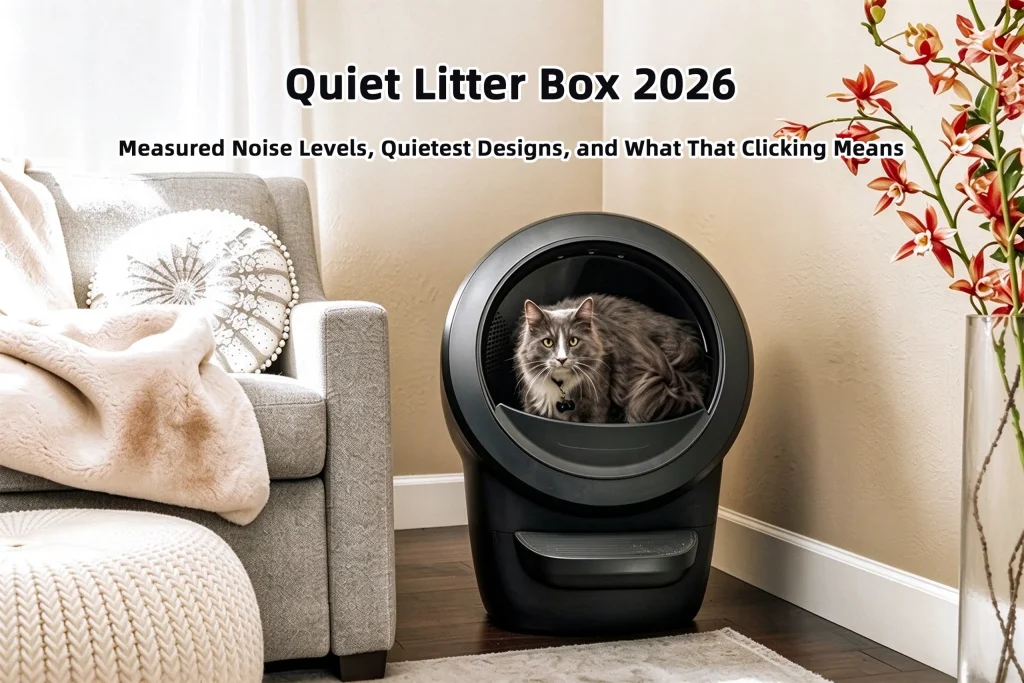
Gray cat resting inside a quiet litter box in a cozy living room demonstrating whisper quiet cat litter box operation

Pet Product Guides

10 Oct 2026

Quiet Litter Box 2026: Measured Noise Levels, Quietest Designs, and What That Clicking Means

Searching for a quiet litter box in 2026? Compare real measured dB levels, explore quiet cat litter box designs, and diagnose clicking or squeaking noises.
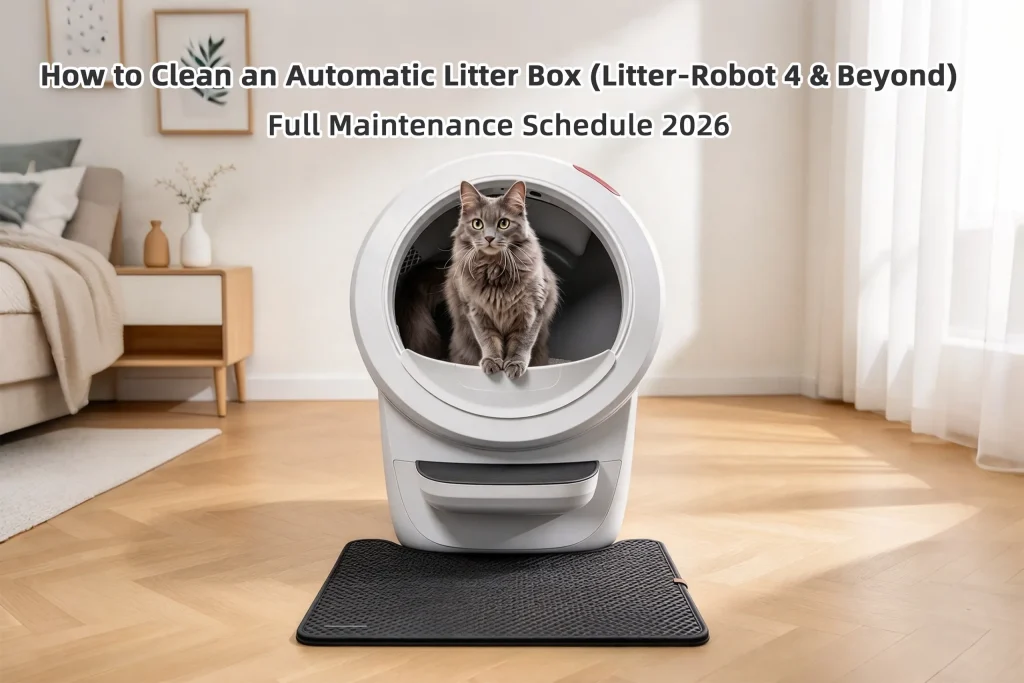
Cat sitting inside a Litter-Robot 4 illustrating how to clean an automatic litter box maintenance schedule

Pet Product Guides

9 Oct 2026

How to Clean Automatic Litter Box (Litter-Robot 4 & Beyond): Full Maintenance Schedule 2026

Learn how to clean an automatic litter box in 2026. Master Litter-Robot 4 deep cleaning, sensor care, enzyme sprays, and filter replacement on schedule.
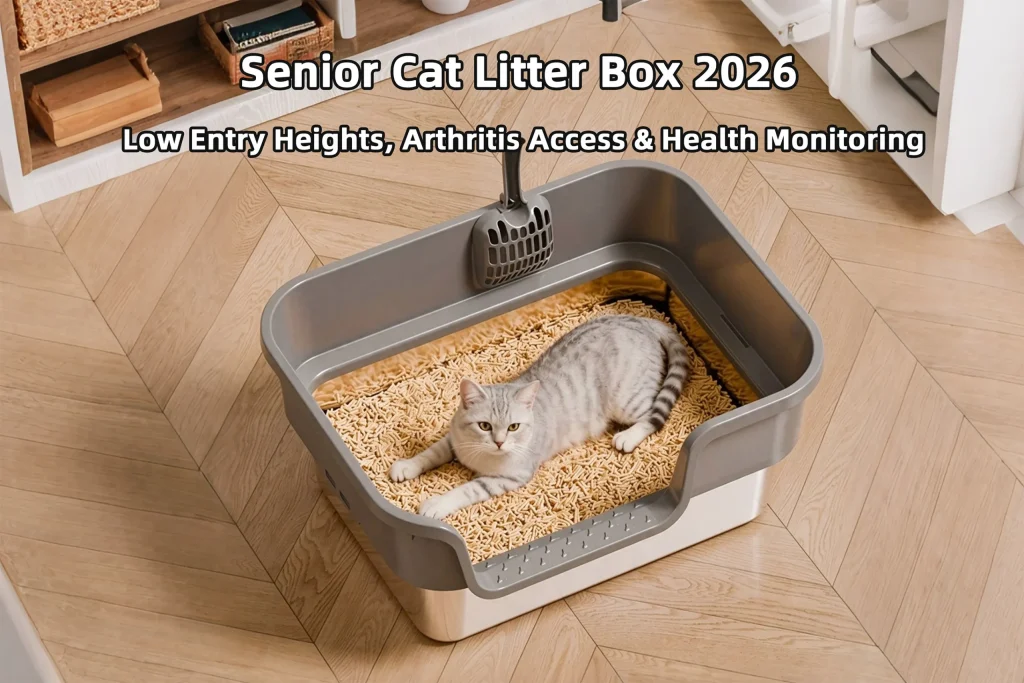
Senior cat resting comfortably in a low entry litter box for senior cats designed for easy arthritis access

Pet Product Guides

4 Oct 2026

Senior Cat Litter Box 2026: Low Entry Heights, Arthritis Access & Health Monitoring

Find the best senior cat litter box in 2026. Discover ideal low-entry heights for arthritis, when automatic boxes help, and health-monitoring benefits.

Contact Us

Send Your Requirements

Ask Factory Price

Get In Touch

Drag & Drop Files, Choose Files to Upload

Send Your Requirements Ask Factory Price

Let's have a chat

Send Your Requirements Ask Factory Price

Let's have a chat