Best Quiet Cat Water Fountain & How to Fix a Noisy Pump

Why is my cat water fountain making noise? Learn how to make a cat water fountain quieter instantly, and discover the best silent models of 2026.

The Best Quiet Cat Water Fountains (Why Most of Them Buzz)

You hear it before you see it.

A cat drinking peacefully from a quiet cat water fountain made of high-density stainless steel, eliminating the acoustic drum effect.

It always starts when the house goes quiet. You’re in bed, lights off, and there it is — that low, relentless hum pushing through the wall from the kitchen. Not loud enough to be obvious. Exactly the right frequency to drill directly into the silence and keep you awake.

You get up, give the fountain a frustrated nudge. It goes quiet for about ten seconds, then slowly builds back up to the same pitch. Eventually you pick the whole thing up and move it to the guest bathroom. Then you search Amazon for a quieter one and notice every single listing says ‘ultra-quiet’ or ‘whisper-silent.’ You’ve heard that before.

Here’s what those listings don’t tell you: the decibel rating on the box was measured in a soundproof lab with the pump floating in open water on rubber dampeners. It has almost no relationship to how that same pump behaves inside your home, mounted in a hollow plastic basin sitting on a hardwood floor.

This guide explains the actual physics of why fountains get loud — and why they get louder over time — then gives you the practical tools to fix the one you own and choose better next time.

Quick Answer

What makes a cat water fountain truly quiet?

Two things: a low-vibration BLDC (brushless DC) pump, and a high-density chassis. Many brands advertise 'silent' motors — but thin plastic housings act as acoustic amplifiers, turning the motor's micro-vibrations into audible hum throughout the room. The quietest cat water fountains use dense materials (304 stainless steel or ceramic) to absorb motor vibrations, paired with a ramped or wall-hugger spout design to eliminate splashing sounds.

The "Acoustic Drum" Effect: Why Plastic Fountains Are Inherently Louder

A silent pump is completely useless if it’s inside a cheap, hollow plastic shell. This is the thing fountain manufacturers almost never explain, because it makes their ‘ultra-quiet’ marketing claim look complicated.

A white cat pawing at a wired stainless steel fountain, illustrating how the power cord can act as an acoustic bridge and answer why is my cat water fountain making noise.

When a brand advertises ‘ultra quiet cat water fountain’ or prints a decibel rating on the packaging, they’re usually copy-pasting the lab rating of the raw pump motor supplied by their component vendor. That rating is captured in a controlled, soundproof chamber with the pump suspended in open water, isolated from any solid surface. It reflects the motor in its best-case acoustic environment, which has zero relation to how it behaves inside your home.


The Physics (Kept Short)

Every pump has a spinning magnetic impeller. That spin creates minute vibrations — too small to feel, but enough to transfer kinetic energy into whatever solid object the pump is touching. When that pump is mounted inside a thin injection-molded ABS plastic basin, those vibrations hit a material with low mass and almost no structural density. Instead of absorbing the energy, the rigid plastic walls flex at the same frequency as the motor. The hollow tank turns into an acoustic drum, amplifying the internal hum and projecting it outward.

A 3D cross-section showing how an unoptimized motor creates vibrations, explaining why is my cat water fountain so loud when housed in thin plastic.

You can test this immediately. If your fountain is currently making noise, press your palm firmly against the outer wall of the plastic tank. The buzz drops significantly. Your hand is acting as a dampening mass — absorbing the energy the plastic is failing to contain. That’s the acoustic drum effect in practice.

Why It Gets Louder Over Time

New plastic starts stiff. But heat from the pump motor, repeated dishwasher cycles, and the ongoing stress of micro-vibration cause thin ABS plastic to very slightly warp over months of use. Micro-warped plastic has less structural rigidity, which means it flexes more, which means it resonates more. The fountain that was tolerable in month one is meaningfully louder in month six — not because the motor changed, but because the housing around it got worse at containing the vibration.

Owners rarely connect the timeline. They remember buying a 'quiet' fountain and assume the motor is failing when it gets louder. In most cases the motor is unchanged. What changed is the housing resonance — and that's a materials problem, not a mechanical one.

Diagnosing Your Fountain Noise: Splashing, Buzzing, or Grinding?

Not all fountain noise is the same problem. Identifying which type you have tells you exactly what to fix — and whether you can fix it without buying a new unit.

What You Hear

Most Likely Cause

Where to Look

Fix

Low, relentless hum / buzz

Plastic housing resonating with pump vibration

Palm of hand test: press outer wall — does the buzz drop?

Dense material chassis (stainless/ceramic) or silicone mat under base

Grinding or rattling buzz

Calcium scale on impeller shaft, or hair wrapped around shaft base

Remove impeller — look for white grit or wrapped hair

Vinegar soak (20 min, 50/50 with warm water); remove debris

Gurgling / sucking sound

Low water level causing air cavitation in pump intake

Check water line — pump running dry?

Top off immediately; pump cavitation causes rapid motor wear

Constant water drip / splash

Open-drop spout with free-fall water return

Watch the spout: does water fall through air before hitting reservoir?

Ramp/wall-hugger spout design; reduce flow rate if adjustable

Vibration through floor

Pump vibration transferring via rigid surface into building structure

Put fountain on bare hardwood or tile vs. soft mat — difference is immediate

High-density silicone or neoprene mat under base

Intermittent stutter

Partial blockage in pump intake grate

Check filter position; look for hair clump on intake

Clear intake, reseat filter, check pump alignment in cradle

The most common owner confusion: grinding buzzing gets blamed on the filter. The filter has nothing to do with pump noise. The grinding means the impeller is fighting friction — calcium scale, hair, or both. A new filter installed into an unclean pump housing will be just as loud as the old one, usually within a week.

For a deeper breakdown of impeller failure mechanics: → TOP 6: Why Cat Water Fountain Pumps Fail So Fast

The Splash Problem: Water Architecture and Spout Design

The mechanical noise is only half the story. Many fountains are quiet at the motor level but loud at the spout — where the water lands.

An engineering diagram comparing a noisy open-drop spout to an ultra quiet cat water fountain with a ramped spout that eliminates splashing.

Budget fountain designs use an open-drop spout: water arcs through air and falls directly into a standing pool below. This looks appealing in product photos. In a quiet room at night, it sounds like a dripping tap that never stops. The water breaks the surface, traps air pockets, and creates a continuous pattern of hydraulic impact noise.

The engineering fix is simple and elegant. Premium designs use a ramped or wall-hugger spout where the water exits the nozzle and immediately flows onto a smooth, gently sloped track. Surface tension keeps the water clinging to the ramp as it slides back into the reservoir. No free fall, no air pockets, no splash. The sound difference between an open-drop and a ramped return design is genuinely significant in a quiet bedroom.

First-time owners often set the flow rate to maximum because it looks more impressive. Lower flow rates on most fountain designs produce less splash noise, a lower pump workload, and noticeably longer pump lifespan. It's worth experimenting with the flow adjuster if your model has one.

Why "20dB Silent" Ratings Are Almost Meaningless

Decibel ratings on fountain packaging are real numbers from real tests. They’re just not real-world tests.

The 20dB figure represents the pump in a soundproof chamber, suspended in open water, with rubber dampeners between the motor and any solid surface. That is the absolute best-case acoustic environment for that pump. The moment it gets mounted inside a plastic basin sitting on a kitchen floor, the following happen simultaneously: the plastic housing begins resonating with the vibration, the hard floor acts as a secondary sounding board, and any existing mineral deposits in the water add mechanical friction to the impeller.

A cheap ’20dB’ fountain can push well past 40dB within a few months as the housing micro-warps and calcium builds inside the pump shaft. The ‘silent’ rating isn’t a lie — it’s a measurement of a condition that exists for approximately the first week of ownership.

What the Decibel Rating Actually Tells You

A low dB rating confirms the motor was designed for low-vibration operation. It doesn't tell you anything about housing resonance, impeller longevity under mineral stress, or how the unit will sound at month 6. The better indicator: look for owner reviews specifically at the 3-month and 6-month mark. Search '

noise after months' on Reddit or Amazon. The trajectory of noise over time is what matters, not the day-one spec.

How to Make Your Cat Water Fountain Quieter Right Now

If you’re not ready to replace your fountain yet, these three fixes address the three most common noise sources — in order of how much impact they have.

A white pet fountain placed on a silicone mat to decouple it from the hard floor, demonstrating how to make cat water fountain quieter instantly.

1 Silicone Mat Under the Base (Acoustic Decoupling)

If your fountain sits directly on hardwood, tile, or laminate, the floor is acting as a secondary soundboard. The micro-vibrations from the plastic base pass straight into the rigid floor and radiate through the room. Place a thick, high-density silicone pet mat or a neoprene pad underneath the fountain base. The soft elastomeric material absorbs the kinetic energy before it reaches the floor. This single change can make an immediately noticeable difference — most owners describe it as the noise dropping from 'present in the room' to 'only audible if you're standing next to it.'

2 The Vinegar Soak (Impeller Descaling)

If the noise is a grinding or rattling buzz rather than a hum, the impeller is fighting mineral friction. Unplug the unit, unclip the pump faceplate, pull the magnetic impeller straight out, and soak the impeller and housing in a 50/50 mix of white vinegar and warm water for 20 minutes. The acetic acid dissolves calcium carbonate deposits without damaging the pump components. Swab the inside of the impeller shaft with a cotton bud until it comes out clean, then rinse everything thoroughly before reassembling. Most grinding noise resolves completely after this. For the full protocol: → TOP 3: Cleaning Guide.

3 Check the Water Level (Cavitation Prevention)

When the reservoir drops below roughly half capacity, the pump has to work harder to push water upward against increased hydraulic resistance. More critically: at low water levels, air pockets get drawn into the pump intake, causing cavitation — a violent, erratic gurgling vibration that sounds much more alarming than it looks. Top up the water first. If the noise disappears, you've found the cause. If it doesn't, move on to Step 2.

4 Reseat the Pump in Its Cradle

Pumps are designed to sit in a specific orientation on small suction cups or silicone alignment pads inside the fountain cradle. If the pump has shifted — from cleaning, from the cat nudging the fountain, or from vibration over time — it may no longer be sitting flat. An off-axis pump transfers more vibration to the housing and makes more noise. Unplug, lift the pump out, and reseat it deliberately in the correct position. It's a small fix that often has a disproportionate impact.

What Type of Cat Water Fountain Stays Quiet Long-Term?

If the fixes above are temporary patches rather than a permanent solution — which they often are with budget plastic units — the underlying material and pump architecture are the root cause. Here’s how the options compare acoustically.

Property

ABS / PP Plastic

304 Stainless Steel

High-Fired Ceramic

Acoustic Resonance

High — thin walls vibrate with motor frequency

Low — dense metal absorbs and deadens vibration

Very low — fired ceramic is acoustically inert

“Acoustic Drum” Risk

High — hollow tank amplifies internal hum

Minimal — mass absorbs rather than reflects energy

Minimal — most acoustically stable material

Structural Density

Low — vibration transfers freely through walls

High — 304 steel damps at molecular level

High — dense ceramic structure resists flexing

Long-Term Noise Trajectory

Gets louder as micro-warping occurs over heat cycles

Stays consistent — steel doesn’t warp from heat

Stays consistent — ceramic doesn’t warp or flex

Cleaning Impact on Noise

Micro-scratches increase motor housing contact noise

Non-porous surface doesn’t develop abrasive texture

Same advantage as steel

Internal Link

→ See TOP 2: Stainless vs Plastic

→ See TOP 5: Best Stainless Fountains

→ See TOP 14: Ceramic vs Stainless

Full material science breakdown: → TOP 2: Stainless Steel vs Plastic | → TOP 5: Best Stainless Steel Cat Water Fountains

Why Wireless Pumps Are Quieter (And Not Just for Convenience)

The wireless magnetic induction pump eliminates something most people don’t think about: the acoustic bridge.

Traditional wired pumps have an insulated copper cable that runs from the pump, through the water, and out through a rubber grommet at the base of the basin. That rigid wire — even with its rubber insulation — is a physical connection between the vibrating pump and the outer housing. It conducts vibration. The housing resonates. The floor picks it up.

Wireless induction pumps have no wire passing through the water. The electrical base sits completely dry on the floor. The pump operates via an isolated electromagnetic field from below. Nothing physically connects the vibrating pump to the outer basin wall. The vibration that would have conducted along the wire stays isolated inside the water, where it’s dampened rather than amplified.

The acoustic difference is real and consistently reported by owners who’ve used both. It’s not the primary reason to choose wireless, but it’s a genuine secondary benefit that gets overlooked because most reviews focus on the cleaning convenience.

For the full wireless vs wired technical comparison: → TOP 19: Wireless vs Wired Cat Fountain Pumps

Which Quiet Cat Water Fountain Should You Actually Buy?

The ideal quiet fountain depends on what type of noise you’re trying to solve and how much you want to spend. Here’s how the main options break down acoustically.

Fountain Type

Acoustic Advantage

Practical Trade-off

Best For

Heavy-gauge stainless steel + wireless pump

(e.g. Petlibro Dockstream)

Dense steel deadens motor vibration; wireless pump breaks acoustic bridge to housing

Higher upfront cost; proprietary filters on some models

Most households — best combination of silence + cleanability

High-fired ceramic + wired pump

(e.g. Pioneer Pet Ceramic)

Ceramic is acoustically superior to plastic; pump vibration significantly dampened

Fragility risk; wired pump still transfers some vibration

Owners prioritising maximum acoustic density; single-cat, lower-traffic homes

Stainless steel + wired pump

(e.g. KittySpout, Veken stainless)

Steel improves on plastic; better than most budget options

Wired pump still creates acoustic bridge; louder than wireless equivalent

Budget-conscious buyers stepping up from plastic

Premium plastic + wireless pump

(newer design trend)

Wireless removes acoustic bridge; thick-wall moulding reduces resonance somewhat

Still plastic — long-term micro-warping and resonance increase over time

Wireless convenience without full stainless investment

An infographic comparing different architectures to find the quietest cat water fountain, highlighting heavy-gauge stainless steel and wireless pumps as the top pick.

The practical recommendation for most owners: stainless steel with a wireless pump is the cleanest solution to both noise sources simultaneously. The dense material handles housing resonance; the wireless pump breaks the acoustic bridge. You get a fountain that’s quiet on day one and stays quiet — because neither of the noise drivers (housing resonance, wire vibration transfer) are present.

See the full product evaluation: → TOP 5: Best Stainless Steel Cat Water Fountain (manufacturer teardown)
Frequently Asked Questions

A sudden noise spike is almost always one of two causes: low water level letting the pump suck in air (cavitation — loud, irregular gurgling), or a physical blockage — pet hair or hard water calcium scale — pushing the magnetic impeller off-balance (grinding or rattling buzz). Top up the water first; if the noise persists, disassemble and clean the pump impeller with a vinegar soak. Sudden noise rarely means motor failure — it almost always means something mechanical is interrupting the impeller's spin.


The worst response to a noisy fountain is replacing the filter and assuming that fixes it. Filters have no influence on pump noise. Impeller friction has everything to do with it.

No motorised device is acoustically silent — 0dB is a physics impossibility for any machine with moving parts. But 'effectively inaudible in normal household conditions' is achievable. A heavy-gauge 304 stainless steel fountain with a wireless magnetic induction pump operates below the ambient background noise threshold of a typical room. Most owners describe it as noticeable only if you're standing directly next to it in a completely quiet room.


The practical test: if you can hear your fountain from your bedroom when the rest of the house is quiet, the noise is meaningfully above the ambient threshold. If you have to actively listen for it when standing in the same room, it's at an acceptable acoustic level. Most good stainless-plus-wireless combinations land in the second category.

Yes, measurably. Wired pumps create an acoustic bridge — the power cable physically connects the vibrating pump to the outer housing, conducting vibration into the basin walls and then into the floor. Wireless induction pumps eliminate this bridge. The pump's vibration stays isolated inside the water, which is a better dampening medium than rigid plastic or metal. The difference is most noticeable on hard floors at night.

Three steps in order: (1) Place a thick silicone or neoprene mat under the fountain to decouple it from the floor. (2) Clean the pump impeller — remove it, soak in 50/50 vinegar and warm water for 20 minutes, swab the shaft until clean, rinse thoroughly. (3) Ensure the pump is properly seated and flat on its suction cups or alignment pads inside the cradle. If all three are done and vibration persists, the fountain housing itself is likely micro-warped from heat cycling — which is a material replacement problem, not a cleaning problem.

Most likely the pump impeller wasn't part of the clean. Rinsing the bowl and changing the filter doesn't address the calcium deposits inside the pump housing or hair wrapped around the impeller shaft — which are the two primary mechanical noise sources. The pump needs to come fully apart: faceplate off, impeller removed, shaft swabbed clean, 20-minute vinegar soak on all components. If the noise remains after a thorough pump clean, the housing resonance is the issue — which is a materials problem the cleaning routine can't fix.

A Manufacturing Perspective on Acoustic Design

ENGINEERING PERSPECTIVE

An Engineering Perspective on Fountain Noise

From an engineering standpoint, fountain noise is a solved problem — the physics are well understood and the solutions are straightforward. Dense materials absorb vibration instead of resonating with it. Wireless pump architecture breaks the conduction path between motor and housing. Ramped spout geometry eliminates hydraulic splash noise. None of these are complicated or expensive innovations at scale.

The reason cheap fountains don't implement them isn't that the manufacturers don't know — it's a bill-of-materials decision. Thin ABS plastic is cheaper than heavy-gauge stainless. Wired pumps are cheaper than wireless magnetic induction. Open-drop spouts are cheaper to tool than precision-ramped channels.

Table of Contents

Like this article? Share on:

Latest Insights From Our Experts

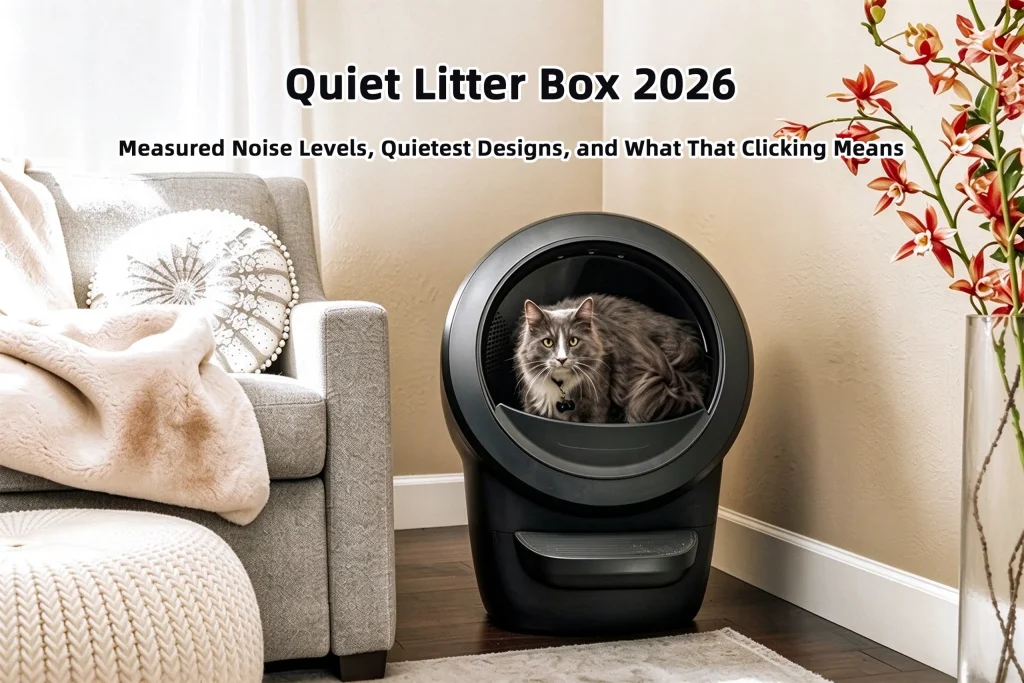
Gray cat resting inside a quiet litter box in a cozy living room demonstrating whisper quiet cat litter box operation

Pet Product Guides

10 Oct 2026

Quiet Litter Box 2026: Measured Noise Levels, Quietest Designs, and What That Clicking Means

Searching for a quiet litter box in 2026? Compare real measured dB levels, explore quiet cat litter box designs, and diagnose clicking or squeaking noises.
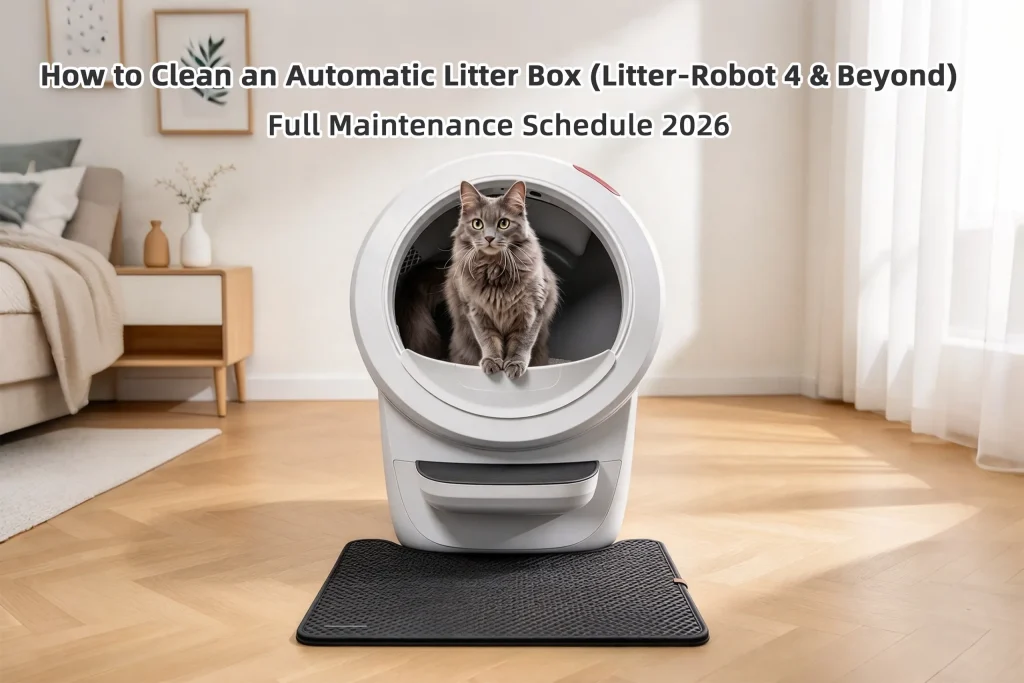
Cat sitting inside a Litter-Robot 4 illustrating how to clean an automatic litter box maintenance schedule

Pet Product Guides

9 Oct 2026

How to Clean Automatic Litter Box (Litter-Robot 4 & Beyond): Full Maintenance Schedule 2026

Learn how to clean an automatic litter box in 2026. Master Litter-Robot 4 deep cleaning, sensor care, enzyme sprays, and filter replacement on schedule.
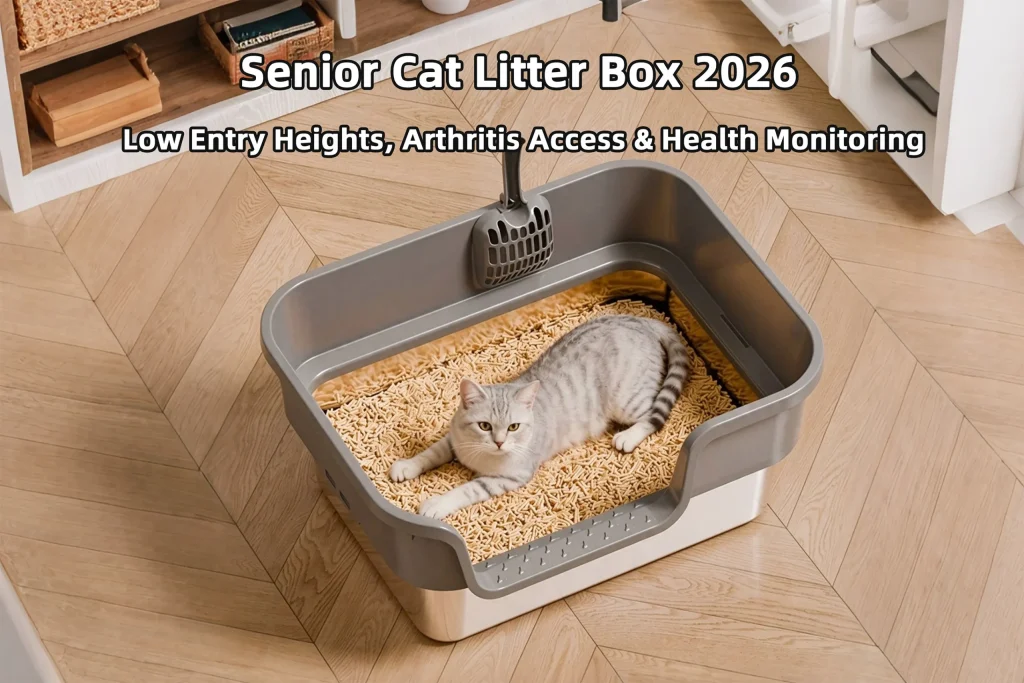
Senior cat resting comfortably in a low entry litter box for senior cats designed for easy arthritis access

Pet Product Guides

4 Oct 2026

Senior Cat Litter Box 2026: Low Entry Heights, Arthritis Access & Health Monitoring

Find the best senior cat litter box in 2026. Discover ideal low-entry heights for arthritis, when automatic boxes help, and health-monitoring benefits.

Contact Us

Send Your Requirements

Ask Factory Price

Get In Touch

Drag & Drop Files, Choose Files to Upload

Send Your Requirements Ask Factory Price

Let's have a chat

Send Your Requirements Ask Factory Price

Let's have a chat