Best Stainless Steel Cat Water Fountains (2026): A Manufacturer’s Picks

Searching for the best stainless steel cat water fountain? We evaluate Petlibro, Veken, and KittySpout from a manufacturer's perspective — steel grade, pump architecture, and real-world cleaning performance.

The Best Stainless Steel Cat Water Fountains of 2026

What is the best stainless steel cat water fountain?

For most households: Petlibro Dockstream — genuine 304 steel, wireless magnetic pump, easy to clean. Best for multiple pets: KittySpout (heavy-gauge basin, high capacity). Best budget entry: Veken stainless (affordable, but verify pump design). All three are evaluated below from a manufacturer's perspective.

So, you finally threw the plastic fountain in the trash.

Good call. You probably noticed the slime first — that faint pink ring at the waterline that came back a few days after you scrubbed it. Then maybe the smell. That slightly sweet, stale scent that lingered even after a full clean and a fresh filter. If your cat also developed chin bumps that the vet called feline acne, that’s the plastic micro-scratch problem completing its full arc.

Switching to a stainless steel cat water fountain solves that specific problem. Non-porous steel doesn’t develop the microscopic grooves that plastic does over time — the grooves where biofilm anchors and rebuilds from even after you’ve washed the bowl. When you clean a good stainless bowl, it actually comes clean.

A grid comparison showcasing twelve different models of cat water fountain stainless steel available on the market.

The catch: not all ‘stainless steel’ fountains are the same thing. Open Amazon right now and you’ll find dozens of silver-coloured fountains with near-identical listings, prices ranging from $19 to $90, and basically no information that helps you tell them apart. As an OEM manufacturer that builds smart pet products for global brands, we see these units from the inside. The differences that matter aren’t visible in the product photos.

This guide evaluates the top models on the three things that actually determine long-term performance: steel grade, pump architecture, and real-world cleaning experience. No affiliate padding.

What to Look For Before Buying (The Short Version)

Before getting into specific models, here’s how we assess any stainless steel cat water fountain. Three things tell you almost everything.


1. Steel Grade: 304 vs. 201

This is the most common deception in the category right now. A listing will say ‘stainless steel’ without specifying the grade. Premium fountains use 304 food-grade steel — the same alloy used in commercial kitchen equipment. It contains enough nickel to resist rust in highly oxygenated, slightly acidic water (which is exactly what you have when cat saliva mixes with tap water).

Cheap fountains use 201 steel. It looks identical on day one. By month three, you start seeing small orange pits along the waterline. The rust itself is the tell — 304 grade doesn’t do that under normal fountain conditions.

Owners usually notice the rust problem gradually — a faint discolouration at the waterline they initially blame on minerals. Then the pitting becomes visible. If your 'stainless' fountain is rusting within six months, it almost certainly started as 201 steel.

2. Pump Architecture: Wired vs. Wireless

Traditional fountains have a pump inside the water connected to a cord that exits through a rubber grommet at the base of the bowl. That grommet is where biofilm loves to concentrate — the textured rubber, the gap where cord meets housing, the corner that’s almost impossible to wipe. And every cleaning session involves pulling that wet cord out before you can even lift the bowl.

An exploded view of a cordless stainless steel cat water fountain showing the seamless tank and wireless magnetic induction pump components.

The better design is a wireless cat water fountain stainless steel setup — magnetic induction pump. The electrical base sits dry on the surface. The tank lifts straight off with nothing attached to it. No cord to unthread, no grommet to clean around. You just pick up the bowl and carry it to the sink.

It’s a small thing until you’ve cleaned a corded fountain fifty times. Then it feels like a fundamental quality-of-life improvement. For the full engineering breakdown on wireless vs. wired pump architecture, see → TOP 19: Wireless vs. Wired Cat Fountain Pumps.

3. Basin Construction: Seams and Corners

Run a finger along the inside corners of the water tank before you fill it. Sharp angles and visible spot welds are where bacteria pools between cleanings — the sponge can’t reach the full corner depth. A well-manufactured stainless basin is stamped from a single sheet with wide, swept curves at the joins. Nothing for biofilm to shelter in.

This is harder to assess from a listing photo. Looking at actual owner reviews at the 6-month mark — specifically comments about whether cleaning feels complete or perpetually slightly slimy — is the best proxy for basin construction quality when you can’t handle the unit in person.

At a Glance: How the Top Models Compare


Petlibro Dockstream

Veken Stainless

KittySpout

AITAKON OEM Tier

Steel Grade

304 food-grade ✓

Claims 304 — verify

304 thick-gauge ✓

304 / 316 selectable

Pump Type

Wireless magnetic ✓

Wired, rubber grommet

Wired, cord mgmt req.

Wireless BLDC ✓

Basin Seams

Seamless ✓

Some seam joins

Welded seams

Seamless stamped ✓

Dishwasher

Bowl yes; pump no

Bowl only

Bowl only

Component-dependent

Filter Cost

Proprietary — higher

Generic compatible

Proprietary sponge

Brand-specifiable

Best For

Daily use, 1–2 cats

Budget entry-level

Multi-pet households

B2B brand builds

Price Range

~$55–70

~$25–35

~$60–80

MOQ-based

Note on pricing: All prices are approximate at time of writing. Verify current pricing on retailer sites before purchasing. ‘AITAKON OEM Tier’ reflects B2B manufacturing specifications, not a retail product.

1 Best Overall

Petlibro Dockstream Stainless Steel Cat Water Fountain

The Petlibro stainless steel cat water fountain has become the reference point for the mid-to-premium category — and from a manufacturing standpoint, it earns that position.

The steel is genuine 304 food-grade. We've tested samples and the passivation layer holds up under sustained water contact and acidic cat saliva without pitting. The drinking tray and main tank both use the same grade, which matters — some brands use quality steel for the visible shell but cut corners on the internal tray components.

The wireless magnetic induction pump is the feature that most owners mention after a few months of use. Cleaning goes from a multi-step cord-management process to lifting the tank, rinsing it, and putting it back. Most people describe it as 'the thing I didn't know I needed until I had it.'

Owners notice the cleaning difference fastest in households with two or more cats. The higher cleaning frequency with multiple cats makes the wireless pickup-and-rinse workflow feel genuinely meaningful vs. wired cord-management every few days.

The Trade-Off to Know

Petlibro uses a proprietary filter shape. You're locked into their replacement filters for the life of the unit — they run meaningfully higher in annual cost than generic carbon pads. If long-term filter cost matters to you, factor that in before buying. The hardware is excellent; the ecosystem cost is real.

Best for: Single to two-cat households wanting the smoothest daily experience. Budget-agnostic buyers who want to buy once and not think about it.

A cat walking towards a Petlibro stainless steel cat water fountain running in a living room.

2 Budget Pick

Veken Stainless Steel Cat Water Fountain

The Veken cat water fountain is almost certainly the first result you'll see when you search Amazon. Tens of thousands of reviews, attractive price point, and a flower-spout design that cats genuinely seem to like — the moving water surface gets hesitant drinkers interested in a way that still water doesn't.

From a user experience standpoint, it works as an entry-level fountain. Cats drink more. The filter does its job for the first few weeks. It's a legitimate upgrade over a static water bowl.

The manufacturing reality is messier.

People who've owned both a Veken and a premium wireless fountain describe the Veken cleaning routine as 'fine until you know what else is possible.' The cord makes the cleaning feel more like a chore than it needs to be — especially as you settle into a routine of doing it every few days.

The Wired Pump Problem

The Veken uses a legacy wired pump. To wash the tank properly, you have to disconnect the pump inside the water, feed the cord through a silicone tube at the bowl base, and extract it before you can even lift the tank to the sink. After you've done this fifty times, it starts feeling like a tax on your time every few days.

The rubber grommet where the cord exits is also a consistent biofilm accumulation point. It's textured, it's at a corner, and it's the exact shape of a bacterial harbour. Many owners report that the slimy feeling persists around the base even after a thorough clean — this is almost always the grommet area retaining biofilm that the sponge can't fully reach.

The Steel Grade Question

Veken lists their fountain as 304 stainless steel. Some units hold up well. Others don't — owner reviews at the 12-month mark include a consistent minority reporting rust pitting around the water line. This suggests either inconsistent steel grade across production batches, or adequate steel with poor surface passivation at the factory level. We can't verify which without batch-specific material testing.

If you buy a Veken and see rust within the first year, it's worth contacting them for a replacement under warranty — and then considering whether the issue is likely to repeat.

Best for: Tight budgets, or households trying stainless steel for the first time before committing to a premium unit.

A long-haired cat sitting next to a traditional wired pet water fountain showing the external power cord connection.

3 Best Multi-Pet

KittySpout Large Capacity Stainless Steel Cat Water Fountain

KittySpout has positioned itself as the heavy-duty, lifetime fountain. The build quality of the basin is immediately obvious — it feels like commercial kitchen equipment, not a pet product. Thick-gauge steel, heavy base, and a wide open-top design that gives large cats and multiple pets comfortable simultaneous access without jostling.

For multi-pet households — cats, dogs, or a mix — the large water surface and high capacity make the KittySpout a genuinely practical choice. The open top also means cats who don't like enclosed drinking areas approach it more willingly.

First-time KittySpout owners often mention being surprised by how heavy it is. That weight is the thick steel — it's not going anywhere if a curious cat nudges it, which matters in households with larger or more active pets.

The Pump Trade-Off

Despite the premium price point, KittySpout still uses a wired pump system. For a fountain at this quality level, that feels like a missed opportunity — the basin engineering is ahead of the pump architecture. The cord-management cleaning process applies here the same way it does on the Veken, which is frustrating when everything else about the unit signals premium.

The open-top design also means the large water surface catches environmental dust and pet hair more than enclosed designs. The pump's pre-filter sponge needs rinsing more frequently to stop the motor from working against particulate buildup. In a clean room with well-groomed cats, this isn't a major issue. In a multi-pet home with shedding animals, it's a weekly task.

Best for: Households with 3+ cats or mixed cat-and-dog setups. Owners who prioritise basin quality and water capacity over wireless convenience.

Stainless Steel Is Better — Not Maintenance-Free

→ For the full cleaning protocol, see TOP 3: How Often Should You Clean a Cat Water Fountain

Switching to a stainless steel cat water fountain will genuinely change the cleaning experience. The pink slime problem — the Serratia marcescens biofilm that keeps returning within days on plastic — slows dramatically on non-porous steel. Most owners describe cleaning intervals extending from every 3–4 days (plastic) to every 7–10 days (stainless). And critically, the cleaning actually feels finished rather than perpetually slightly slimy.

But it’s not maintenance-free. Two things still happen:

  • Hard water scale forms on any material — steel included. If you live in a hard water area, you’ll see chalky white calcium deposits building along the waterline. They sit on the steel surface rather than embedding in it (unlike plastic), which makes them easier to remove. But they still need the monthly vinegar soak treatment to prevent them from reaching the pump impeller.
  • The pump still needs deep cleaning. The biggest misconception owners have after switching to stainless is that the better material means the pump doesn’t need attention. It does. Calcium deposits build inside the pump housing regardless of what the bowl is made from — and a gunked-up impeller on a stainless fountain grinds just as much as one in a plastic unit. Many people blame the filter first. In reality, the slime or smell is usually forming underneath the pump cover long before the filter looks dirty.

A user disassembling and hand-washing the pump impeller, demonstrating that a stainless steel cat water fountain is easy to clean but requires pump maintenance.

The practical upside of stainless: when you do clean, you’re fighting hard water deposits on a non-porous surface rather than embedded biofilm in micro-scratches. That’s a meaningfully easier maintenance experience, not an absent one.
What 'Premium Tier' Actually Looks Like From a Manufacturing Perspective

When brands approach AITAKON to build their next flagship fountain, the first thing they want to leave behind is the cleaning fatigue problem — for their customers, but also because it drives negative reviews and returns. The most consistent feedback they get from their market research is: ‘I loved it for two months, then cleaning it became a chore, then the pump started making noise.’

From a manufacturing standpoint, those three failure modes — cleaning fatigue, pump noise, and the slime cycle — all have upstream engineering solutions. Non-porous steel grade selection eliminates the micro-scratch biofilm problem. Wireless magnetic pump architecture eliminates the cord-management cleaning friction. Seamless unibody stamping eliminates the seam and corner biofilm harbours. Precision-toleranced impeller housings eliminate the early calcium encrustation that causes pump noise.

The brands that build on these specs produce fountains where the owner experience at month 18 isn’t meaningfully different from month 1. That gap — between a fountain that holds up and one that gradually becomes a source of frustration — is mostly determined before the first unit is manufactured.

For B2B brands building in this category: enquiries welcome at aitakon.com/contact.

Frequently Asked Questions

It significantly reduces the risk. Feline chin acne is often associated with bacteria anchoring in the micro-scratches of plastic bowls — which a cat's tongue and standard cleaning progressively deepen over time. 304 stainless steel is hard enough that normal use doesn't create those micro-scratches. A standard wash removes surface biofilm completely, keeping the drinking edge consistently clean. Switching to stainless is frequently recommended by vets for cats with recurring chin acne.


Worth noting: feline acne has multiple possible causes, and diet, stress, and individual cat sensitivity all play a role. Switching to stainless resolves the bowl-contamination vector — but if acne persists after switching, it's worth a vet check for other contributing factors.

If it's rusting, it was almost certainly manufactured from 201-grade steel rather than genuine 304. True 304 steel contains enough nickel to maintain a self-healing oxide layer that resists rust under normal water conditions, including acidic cat saliva and oxygenated tap water. 201 steel looks identical on day one but lacks the corrosion resistance — pitting typically appears along the waterline within 3–6 months.


If your fountain starts rusting within the first year, contact the manufacturer. A fountain that rusts is a warranty issue. And if the replacement rusts too, consider it confirmation that the steel grade doesn't match the listing claim — and budget for a different brand.

Yes — and they're actually safer than traditional wired designs in one specific way. Wireless magnetic induction pumps keep all electrical components completely dry, inside the sealed base that sits on the floor. The pump that operates inside the water is entirely passive — it has no wiring, no electrical connection, no risk of current in the water. For households with cats who chew cords, the wireless design also eliminates a potential safety issue with traditional corded pumps.

For long-term hygiene, yes. Plastic develops micro-scratches over time from your cat's tongue and from cleaning — these microscopic grooves become permanent biofilm anchors where bacteria regrows within days of cleaning. 304 stainless steel doesn't develop these scratches under normal use, so biofilm sits on the surface rather than embedding in it. A standard wash removes it completely. Owners switching from plastic to stainless steel consistently report cleaning intervals roughly doubling and describe the fountain feeling genuinely clean rather than perpetually slightly slimy.


For the full material comparison: TOP 2: Stainless Steel vs Plastic Cat Water Fountain

The steel bowl components usually are — but the pump is almost never dishwasher safe, regardless of what the listing says. High-heat drying cycles can warp plastic pump components by a small but meaningful amount. A warped pump housing may no longer seal correctly against the intake tube, leading to air in the water flow and dramatically increased noise. Wash the bowl and tray in the dishwasher if the manufacturer confirms it. Always hand-wash the pump.

The terms are used interchangeably in most listings. Both refer to fountains where the pump inside the water has no cord connecting to the power supply — it operates via magnetic induction from a wired base that sits dry underneath the bowl. 'Cordless' and 'wireless' in this context both mean the same thing: you can lift the fountain tank off the base without unplugging or unthreading anything.

Table of Contents

Like this article? Share on:

Latest Insights From Our Experts

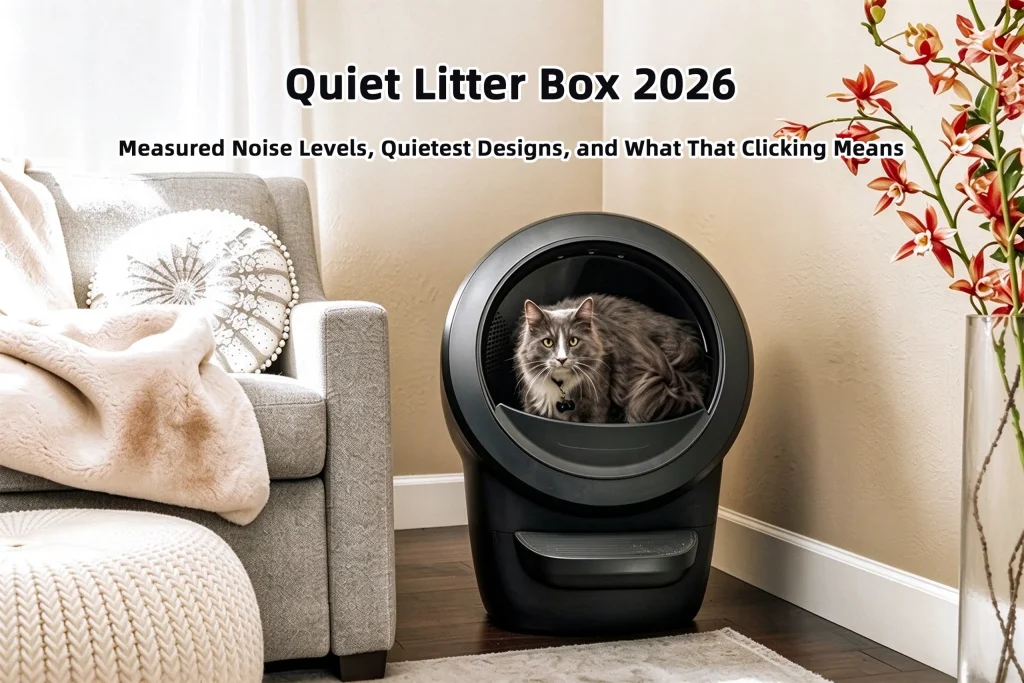
Gray cat resting inside a quiet litter box in a cozy living room demonstrating whisper quiet cat litter box operation

Pet Product Guides

10 Oct 2026

Quiet Litter Box 2026: Measured Noise Levels, Quietest Designs, and What That Clicking Means

Searching for a quiet litter box in 2026? Compare real measured dB levels, explore quiet cat litter box designs, and diagnose clicking or squeaking noises.
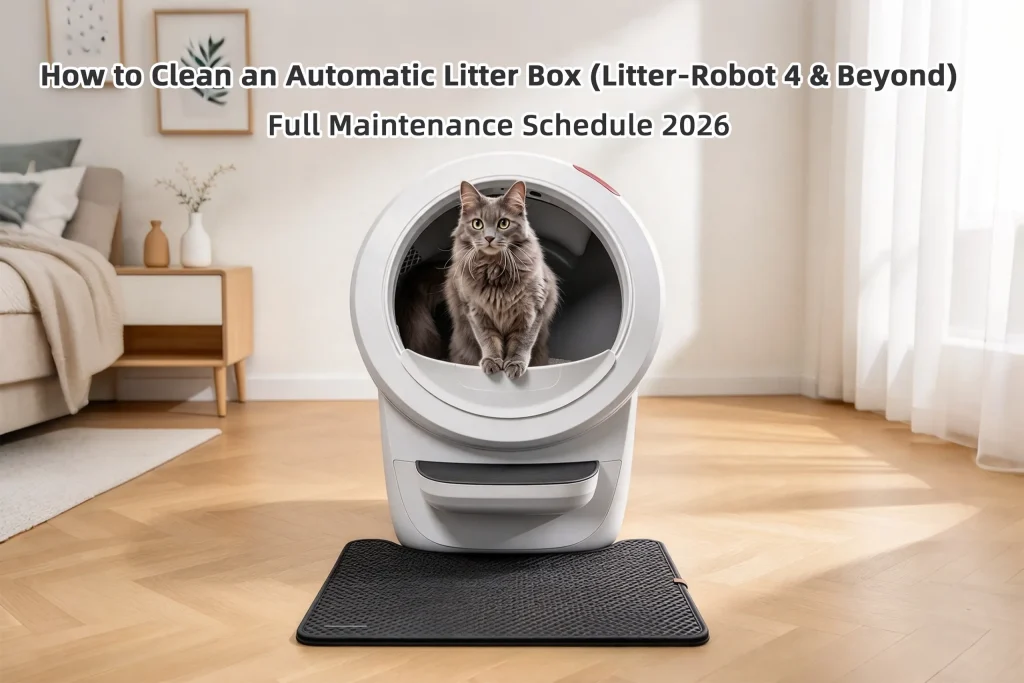
Cat sitting inside a Litter-Robot 4 illustrating how to clean an automatic litter box maintenance schedule

Pet Product Guides

9 Oct 2026

How to Clean Automatic Litter Box (Litter-Robot 4 & Beyond): Full Maintenance Schedule 2026

Learn how to clean an automatic litter box in 2026. Master Litter-Robot 4 deep cleaning, sensor care, enzyme sprays, and filter replacement on schedule.
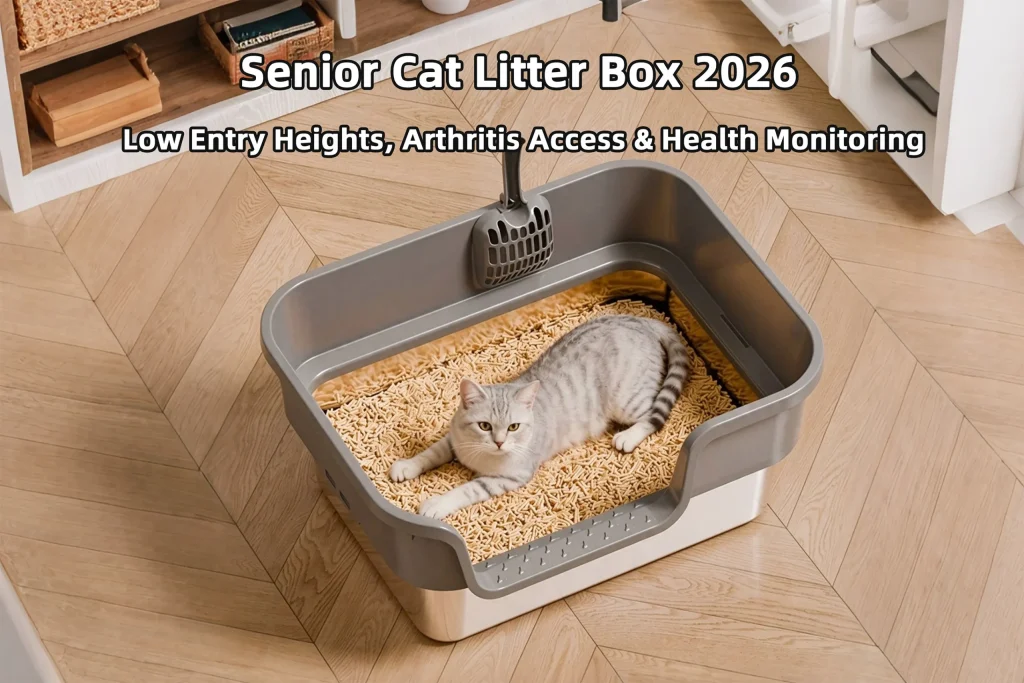
Senior cat resting comfortably in a low entry litter box for senior cats designed for easy arthritis access

Pet Product Guides

4 Oct 2026

Senior Cat Litter Box 2026: Low Entry Heights, Arthritis Access & Health Monitoring

Find the best senior cat litter box in 2026. Discover ideal low-entry heights for arthritis, when automatic boxes help, and health-monitoring benefits.

Contact Us

Send Your Requirements

Ask Factory Price

Get In Touch

Drag & Drop Files, Choose Files to Upload

Send Your Requirements Ask Factory Price

Let's have a chat

Send Your Requirements Ask Factory Price

Let's have a chat