Cat Tree Quality Control Checklist: How to Inspect Before Bulk Orders | Aitakon

The 3-stage cat tree quality control checklist used by B2B buyers to eliminate returns. Pre-production, in-line, and pre-shipment inspection protocols with AQL standards.

Cat Tree Quality Control Checklist: How to Inspect Before Bulk Orders

Here is the most expensive lesson in cat tree sourcing: factories do not cut corners on samples. They cut corners on bulk production.

The sample that earns your approval is handled by the factory’s most experienced assembler, built with the verified-batch materials that are ready when you visit or when a sample shipment is being prepared. The bulk order that follows 8–10 weeks later is assembled on a production line optimized for speed — where every shortcut that saves 60 seconds per unit, across 500 units, adds up to significant labor cost reduction.

A systematic cat tree quality control checklist is not bureaucracy. It is the mechanism that holds the bulk order to the same standard as the approved sample — at each of the three stages where quality can diverge before your container ships.

Comparison between an approved cat tree sample and the assembly line production process with a quality control checklist.

This guide covers the complete three-stage inspection system — pre-production material lock-in, in-line production control, and pre-shipment final gate — with specific pass/fail criteria, AQL sampling standards, documentation requirements, and the defect patterns most likely to generate returns. For the full factory qualification context, see our guide to finding a reliable cat tree manufacturer in China.

Why Quality Problems in Cat Trees Appear After Shipping, Not During Inspection

The container environment as an accelerant

A sea shipping container is not simply a box that moves your product from factory to warehouse. Over a 28–50 day transit, it becomes an environment that stress-tests every material choice and every assembly shortcut simultaneously.

Internal container temperatures during summer transit through equatorial zones routinely reach 50–65°C — conditions that accelerate VOC off-gassing from adhesives by a factor of 3–5× compared to temperate warehouse storage. Humidity fluctuations during the same transit cycle cause composite wood boards to absorb and release moisture, stressing joint bonds at every screw point. Vibration from sea swells and port handling subjects structural joints to fatigue loading that a static factory inspection cannot replicate.

The result is a product category with a distinctive failure pattern: it passes factory inspection, travels by sea, and fails customer inspection at unboxing. Understanding this mechanism is the reason the cat tree quality control checklist must operate at three stages, not one.

The sample-to-bulk divergence problem

The most dangerous gap in cat tree quality control is not a factory failing to meet a specification — it is a factory that met the specification at the sample stage and then quietly diverged at the bulk production stage. This divergence is typically not malicious; it is the natural outcome of production optimization. The approved sample used a 15mm CARB P2 board because that was the available stock. The bulk order gets 12mm board because it arrived first. The approved adhesive was water-based; the bulk production line uses whichever drum is open when assembly starts.

None of this shows up on the invoice. The product looks identical. The divergence only surfaces in the return rate.

The three-stage inspection system addresses this by creating control points before, during, and after production — so material substitutions and assembly shortcuts are caught before the container is sealed, not after it lands.

Stage 1: Pre-Production Inspection — Locking Your Risk Level

STAGE 1  ·  Pre-Production  ·  Timing: Before production begins  ·  Purpose: Material lock-in

Pre-production inspection is the most leveraged stage of the quality control process. At this point, no labor has been spent, no material has been cut, and no irreversible assembly decisions have been made. Catching a non-compliant board or unapproved adhesive here costs a phone call and a one-week delay. Catching the same problem at the pre-shipment stage costs a rejected container.

A quality inspector reviewing a certification inspection certificate for eco-friendly wood boards used in cat tree construction.

Board material verification

The board specification is the foundation of every structural and chemical compliance requirement. The pre-production board check has three components that must all pass before production is authorized to begin.

CARB P2 certification verification. Request the Third Party Certifier (TPC) name and certificate number for the board grade specified in your golden sample. Verify it in the CARB Composite Wood Products database at arb.ca.gov. A factory-level certificate is not sufficient — you need the specific board product line covered by the TPC certification. For the complete board compliance framework, see our article on CARB P2 board compliance.

Batch-to-specification matching. The board batch that will be used in your production run must be physically present at the factory before production is authorized. Request a photo of the board stock with the batch number and a sample of the TPC batch test report. This is the step that catches the most common material substitution — the factory ordered your approved board, but it hasn’t arrived yet, and they plan to start production with whatever is in the warehouse.

Physical density check. CARB P2 certification confirms emission compliance, not density. A board can be CARB P2 certified and still be under-specified for structural use if the density is too low. Specify a minimum density of 640 kg/m³ for particleboard used in structural applications (base boards, platform decks, upright brackets). Ask for the board manufacturer’s datasheet showing density specification, or request a sample for physical weight-per-volume measurement.

⚠️

Pass Criterion

CARB P2 TPCC certificate verified in database + batch-specific test report dated within 12 months + board density ≥ 640 kg/m³. Failure on any of these three points = product hold until resolved.

Adhesive system verification

The adhesive system must be locked to the approved specification before production begins. Adhesive substitution mid-production is the leading cause of sea-transit smell complaints and the most common material quality divergence in repeat orders.

MSDS review. Request the Material Safety Data Sheet for every adhesive used in production — fabric bonding, board assembly, post wrapping, and any foam or cushion applications. Review Section 3 (Composition) for the presence of organic solvent carriers (toluene, xylene, MEK, ethyl acetate). Review Section 9 for VOC content in g/L. Acceptable specification: water-based adhesive with VOC content below 50 g/L. For the complete adhesive chemistry framework, see our article on cat tree adhesives and VOC compliance.

Application method confirmation. Ask how the adhesive is applied — spray, roller, or brush. Water-based adhesives applied by brush from an open container lose viscosity rapidly and are often thinned with water, reducing bond strength. Confirm that the factory uses spray or roller application for fabric bonding, which produces more consistent coverage and better bond strength than brush application.

⚠️

Pass Criterion

MSDS shows water-based carrier + VOC content below 50 g/L + application method is spray or roller.

Red flag: supplier cannot produce an MSDS, or the MSDS shows any organic solvent in Section 3.

Fabric GSM and colorway verification

Fabric quality divergence between sample and bulk is the second most common material substitution after board switching. The mechanism is straightforward: the approved sample used 400gsm plush from a specific mill; the bulk order used whatever roll the factory had in stock when cutting began.

Before production, cut a 10cm × 10cm swatch from the fabric roll intended for your order and weigh it. A 400gsm fabric should yield approximately 4.0g ± 0.3g for a 100cm² sample. Also verify the Pantone or color reference against your approved swatch card — color lot variation between batches from the same mill is normal, but it must be caught before cutting, not after 500 units have been assembled.

For the complete fabric specification framework covering GSM standards by product tier, see our cat tree materials safety guide.

Sisal rope quality check

Sisal rope quality is not visible in finished product photography and is frequently downgraded in bulk production. Pre-production sisal verification covers three parameters: diameter (minimum 8mm for standard-tier products; 10mm for premium), fiber density (no visible gaps in the weave when the rope is pulled taut), and chemical treatment (smell a section of the rope — natural untreated sisal has a mild grassy smell; chemically treated rope has a detectable industrial smell that will intensify in a sealed container).

Stage 2: In-Line Production Inspection — Catching Shortcuts in Real Time

STAGE 2  ·  In-Line Production  ·  Timing: During active production run  ·  Purpose: Assembly quality control

In-line production inspection is the stage most buyers skip because it requires either a physical presence at the factory or a trusted third-party inspector on-site. It is also the stage with the highest return-rate impact, because this is where factories optimize for speed — reducing screw count, applying spot glue instead of full-coverage bonding, and skipping the structural checks that slow down the assembly line.

Factory worker performing an in-line quality check on wooden panels during the cat tree manufacturing process.

Structural assembly checks

Screw alignment and seating. Every structural screw must be vertical (perpendicular to the surface) and fully seated (flush with or below the surface level). Angled screws — the most common in-line shortcut, caused by rushed pre-drilling — create a lever arm that concentrates stress on the screw-to-board interface. Under repeated load, an angled screw loosens within 2–4 weeks of customer use, producing the wobble that generates structural-failure returns.

Screw count verification. Count the screws on three random units from the production line and compare to the approved assembly specification. A reduction from 4 screws to 3 screws at a platform joint may save 30 seconds per unit in assembly time. It also reduces the joint’s load capacity by 25% and introduces the failure mode that Amazon customers photograph and post in reviews.

Wobble test — shake method. For towers above 100cm assembled height, grasp the top platform and apply lateral force for 10 seconds. Maximum acceptable deflection before recovery: 5mm at the top of a 120cm tower. Greater deflection indicates either insufficient screw count, under-specified board density, or post diameter below specification. This test should be applied to three random units from the production run, not the first unit assembled.

✅

In-line Structural Pass Criteria

All screws vertical + fully seated + count matches spec. Wobble test deflection ≤5mm at top platform.

Failure on any unit = production pause + root cause investigation before resuming.

Adhesive coverage and bonding quality

Full-coverage vs spot-glue check. Lift a corner of the fabric on a freshly assembled platform. The adhesive should be visible as a continuous film across the full bonding surface — not as isolated spots or strips. Spot-glue application is the fastest shortcut available to an assembly line worker and produces fabric that peels cleanly from the board within weeks of customer use. This failure mode is also photogenic and generates the type of review photo that is shared and cited by other buyers.

Adhesive consistency across units. Check three units from different points in the production run. Inconsistent adhesive coverage — full on the first unit, spot on the third — indicates that the production line is not maintaining process discipline, usually because the adhesive application station is running ahead of the line and workers are rushing the glue step to keep up.

Random unit comparison — the 3-unit rule

Select three units from different points in the production run — one from the first 10% of output, one from the middle, and one from the last 10%. Compare them side by side for: fabric coverage consistency (are all edges tucked identically?), post wrapping tightness (is the sisal tension uniform?), and assembly squareness (do all platforms sit level?). Variation across these three units is the most reliable indicator of production line control quality. A well-run production line produces near-identical units throughout. A poorly controlled line produces variation that increases as workers tire and pace pressure increases.

Stage 3: Pre-Shipment Inspection — The Final Gate Before Your Container Seals

STAGE 3  ·  Pre-Shipment  ·  Timing: After production complete, before container loading  ·  Purpose: Final accept/reject decision

Pre-shipment inspection is the final opportunity to stop a non-compliant shipment before it becomes your problem. At this stage, all units are produced and packed. The inspection covers a statistically valid sample of the total order, tests performance under simulated transit conditions, and produces a written report that either authorizes container loading or triggers a hold.

Inspected cat tree boxes organized on pallets in a warehouse ready for shipping and container loading.

AQL sampling standard — how many units to inspect

Professional pre-shipment inspections use AQL (Acceptable Quality Level) sampling tables — the international standard (ISO 2859-1) that determines how many units to inspect based on order quantity and the defect severity classifications you care about. Using a published AQL standard rather than an arbitrary sample size gives your inspection legal weight and provides a defensible basis for rejection if the shipment fails.

For cat tree orders, Aitakon recommends AQL 2.5 for major defects and AQL 4.0 for minor defects, at Inspection Level II. The table below gives practical sample sizes for common cat tree order quantities.

Diagram showing the AQL 2.5 ISO 2859-1 inspection standard for cat tree batch testing and judgment results.

Order qty (units)

Sample size

Critical defects (reject at)

Major defects AQL 2.5 (reject at)

Minor defects AQL 4.0 (reject at)

Level

50–90

13

0

1

2

II

91–150

20

0

1

3

II

151–280

32

0

2

5

II

281–500

50

0

3

7

II

501–1200

80

0

5

10

II

1201–3200

125

0

7

14

II

Defect Classification Guide

Level Definition & Examples
Critical Structural failure risk (screw count below spec, board cracked, post detached)
Major Likely to cause returns or complaints (smell, fabric peeling, visible wobble, color mismatch)
Minor Cosmetic issues unlikely to cause returns (minor fabric crease, slight packaging scuff)

The closed-box odor test

This is the single most predictive test for sea-transit smell performance. Seal a finished unit inside its production carton and place it in a space at 38–40°C for 24 hours. At the end of the 24-hour period, open the carton immediately and assess the interior smell at close range.

A passing result: neutral or very mild smell — similar to a new piece of furniture, not a chemical odor. A failing result: sharp, solvent-like, or industrial chemical smell that is detectable within 30cm of the open carton opening. A failing result at this test represents near-certain sea-transit smell complaint generation. The 24-hour/40°C exposure approximates approximately 2 weeks of standard sea transit conditions — roughly half of the actual transit time, meaning the actual customer experience will be measurably worse than what the test produces.

Do not accept “the smell will go away after a few days” as a response to a failed odor test. Residual VOC off-gassing from solvent-based adhesives is not surface contamination that ventilates away — it is ongoing emission from the adhesive film itself.

Static load test

Technical testing of a cat tree's weight capacity using a 5kg weight and measuring tools to ensure stability.

Apply 1.5× the product’s rated weight capacity to the top platform for 4 hours. For a cat tree rated for 10kg (a common specification for large-breed towers), this means 15kg distributed across the top platform surface. At the end of the test period, inspect for: visible platform deflection, any audible cracking or popping during loading, and screw movement at the top platform-to-post joint.

Acceptable result: no visible deflection, no structural sounds, no screw movement. A platform that deflects more than 3mm under this load, or a joint that produces any audible cracking, represents a structural specification failure — typically caused by under-density board, insufficient screw count, or post diameter below specification.

ISTA 2A drop test for carton integrity

For e-commerce cat trees, the ISTA 2A (or 3A for pure e-commerce fulfilment) drop-test protocol is the standard for verifying that the packaging protects the product through typical parcel carrier handling. The test involves dropping the sealed carton from 76cm onto a flat surface at the corner, edge, and face orientations specified in the protocol.

After each drop orientation: open the carton and inspect for internal product damage — cracked boards, dislodged components, and torn fabric. A carton that fails corner drops is typically under-specified in wall thickness (should be double-wall corrugated, minimum 5-ply for cat trees over 8kg) or has insufficient internal cushioning at structural corners.

A failed ISTA drop test means the product will arrive damaged to a predictable percentage of customers — not as an occasional transit accident but as a systematic packaging failure. This needs to be resolved at the carton specification level before bulk shipment, not managed as an acceptable loss rate.

Packaging seal and labeling check

Verify that all carton seams are fully sealed with pressure-sensitive tape of appropriate width (minimum 50mm) applied in the H-pattern on both top and bottom. Cartons sealed with a single strip of narrow tape at the centerline fail at the unsealed side seams under corner-drop conditions. Also verify that all required market labels (CARB P2 compliance statement if required by retailer, country-of-origin marking, and any product safety certifications) are present, legible, and correctly positioned.
Step-by-Step: How to Conduct a Cat Tree Pre-Shipment Inspection

This is the complete sequential process for a professional cat tree pre-shipment inspection at AQL 2.5 / Level II. Each step must be completed and documented before proceeding to the next.

✅

10-Step Production Inspection Checklist

1

Verify board batch documentation

Request and review: TPC certificate name and number (verify in CARB database), batch-specific test report dated to match production window, and board density datasheet showing ≥640 kg/m³. If any document is missing or cannot be verified: production hold.

2

Confirm adhesive MSDS

Collect the MSDS for all adhesives used in production. Review Section 3 for carrier type (water = pass; organic solvent = fail) and Section 9 for VOC content (≤50 g/L = pass). Red flag: supplier cannot produce MSDS.

3

Determine sample size using AQL table

Use the order quantity to determine sample size from the AQL table above. Select units randomly from the full production run — not all from the beginning of the run.

4

Conduct structural shake test on each sampled unit

Grasp the top platform of each assembled unit and apply lateral force for 10 seconds. Record deflection. Any unit exceeding 5mm deflection = major defect.

5

Inspect screw alignment, seating, and count

For each sampled unit, verify screw verticality, full seating, and count against the approved assembly spec. Any discrepancy = major defect.

6

Check adhesive coverage

Lift the corner of the platform fabric on each sampled unit. Full adhesive film = pass. Spot or missing coverage = major defect.

7

Conduct closed-box odor test on 3 units

Seal in production cartons at 40°C for 24 hours. Open and assess. Any detectable sharp chemical smell = critical defect. Do not ship.

8

Conduct static load test on 2 units

Apply 1.5× rated weight for 4 hours. Inspect for deflection or structural sounds. Any failure = critical defect.

9

Conduct ISTA 2A drop test on 2 cartons

Full protocol: corner, edge, and face drops from 76cm. Open and inspect for internal damage after each orientation. Packaging failure = major defect.

10

Document and issue inspection report

Photograph all defects found. Record defect counts by category (critical / major / minor) against AQL acceptance numbers. Issue written pass/release or fail/hold decision. No container loads without written inspection release.

Quick QC Decision Table: What You See, What It Means, What to Do

What you find

Severity

Root cause

Correct action

Strong chemical smell on odor test

CRITICAL

Solvent-based adhesive or uncertified board

Stop shipment. Do not load container. Identify source (board vs adhesive). Full remediation before re-inspection.

Screw count below spec

MAJOR

Assembly line speed optimization

Hold affected units. Count all units in sample. If pattern confirmed: full production rework.

Angled / partially seated screws

MAJOR

Rushed pre-drilling, wrong drill bit angle

Rework affected joints. Verify drill jig is correctly set before resuming production.

Spot adhesive / fabric corner lifting

MAJOR

Incomplete glue application, rushed assembly

Rework all affected units. Re-inspect adhesive coverage across full AQL sample.

Wobble >5mm on shake test

MAJOR

Board density low, screw count reduced, post spec

Root cause analysis required before release. Identify which variable: re-test board density.

Platform deflection on load test

CRITICAL

Board thickness or density below spec

Stop shipment. Verify board specification against purchase order. Full batch review.

Carton failure on drop test

MAJOR

Single-wall carton, insufficient corner protection

Redesign carton spec: double-wall minimum, internal corner cushioning. Re-test before shipment.

Fabric color mismatch vs approved swatch

MAJOR

Different fabric batch, no color-lock

Reject affected units. Confirm Pantone reference with factory. Re-cut from correct batch.

Fabric GSM visibly thinner than sample

MAJOR

Material substitution on fabric roll

Request GSM measurement of current roll. If below spec: halt fabric cutting. Source correct roll.

Minor staple exposure at fabric edges

MINOR

Fabric cut slightly short, edge tuck incomplete

Rework fabric tuck on affected units if feasible. Document count for AQL assessment.

Packaging seal incomplete

MINOR

Single-strip tape, missed side seam

Re-tape all cartons to H-pattern specification. Re-inspect 10% of cartons.

Aitakon conducts pre-shipment inspections at AQL 2.5 / Level II for qualified bulk orders, including board batch verification, sealed-box odor testing, structural load testing, and ISTA drop testing. Written inspection report provided before container loading. Contact Aitakon at aitakon.com to discuss your next shipment.

How to Evaluate a Cat Tree Manufacturer's Own QC System

The questions that reveal whether a QC system actually exists

A manufacturer’s self-described QC process and their actual QC process are frequently different things. The gap between them is revealed not by asking “do you have quality control?” but by asking for specific outputs from that system.

  • Can you show me your incoming material inspection (IQC) records from the last three production runs? A factory with genuine IQC will have documentation showing board density measurements, fabric GSM check results, and adhesive MSDS on file for each batch. A factory without genuine IQC will not have these records.
  • What is your in-process defect rate for structural joints, and how is it tracked? The question is not whether they have defects — every production line does. The question is whether they measure and track them. A factory that measures its defect rate can improve it. A factory that doesn’t know its defect rate is not in control of its quality.
  • What happens when an in-line inspector flags a defect? Ask for a specific example. The answer reveals whether their quality system has authority to stop production or is purely advisory.
  • What is your board moisture content control process during storage? Boards stored without humidity control in a factory warehouse can absorb moisture to the point where screw joints are compromised before assembly even begins. A factory with genuine material control has a covered storage area and monitors board moisture content before cutting.
  • Can you provide the pre-shipment inspection report from your last two container shipments? A factory that conducts genuine pre-shipment inspection has these reports available. Review them for defect classification, sample size used, and the inspection pass/fail criteria applied.

Red flags in factory QC conversations

Certain responses to quality questions are reliable indicators that a factory’s QC system is more documentation than practice.

  • “We have very strict quality control” without any specifics. This is the QC equivalent of “we have 10+ years of experience” — a claim with no content. Follow up immediately with specific documentation requests.
  • “Our products are all certified” when asked about testing. Ask which products, what certification, and which third-party body certified them. Generic answers indicate generic certificates.
  • Reluctance to allow in-line inspection or video of the production floor. Genuine OEM factories welcome production transparency because it protects them from buyer disputes as much as it protects the buyer.

For a broader framework on factory qualification beyond QC — including production capability assessment, trial run structure, and engineering capability testing — see our guide to finding a reliable cat tree manufacturer in China. 

Frequently Asked Questions: Cat Tree Quality Control

AQL (Acceptable Quality Level) is an internationally standardized sampling system (ISO 2859-1) that defines how many units to inspect from a production batch and the maximum number of defects acceptable before the batch is rejected. For cat trees, Aitakon recommends AQL 2.5 for major defects at Inspection Level II. Using a published AQL standard gives your inspection statistical validity and provides a legally defensible basis for shipment rejection if defects exceed the acceptance threshold. It also prevents the two most common sampling errors: inspecting too few units (missing a systemic defect) or inspecting so many that the cost exceeds the risk.

Both are necessary, and they serve different purposes. Pre-production inspection locks in the materials — it confirms that the boards, adhesive, and fabric that will be used in your order match your approved specifications before any production begins. Pre-shipment inspection verifies that the assembled product meets your quality standards. Skipping pre-production inspection means you discover material substitutions only after 500 units are assembled. Skipping pre-shipment inspection means you discover assembly defects only after the container arrives.

Seal a finished unit inside its production carton and store it at 38–40°C for 24 hours. Open the carton immediately at the end of the period and assess the interior smell at close range. A compliant product (water-based adhesive, CARB P2 board) smells neutral or mildly like new furniture. A non-compliant product (solvent adhesive, uncertified board) produces a sharp, chemical odor. This test simulates approximately two weeks of sea transit outgassing — roughly half the actual transit time, meaning customer-experienced odor will be stronger than the test result.

For a 500-unit order at AQL 2.5 / Inspection Level II, the correct sample size is 50 units (from ISO 2859-1, Lot Size 281–500, Sample Letter H). For major defects at AQL 2.5, the acceptance number is 3 (reject if 4 or more major defects found in the 50-unit sample). For critical defects (structural failure risk, smell failure), the acceptance number is 0 — a single critical defect triggers shipment hold.

For initial orders with a new supplier, no. A factory's internal inspection report has an inherent conflict of interest — the factory's incentive is to pass the shipment, not to protect your interests. Third-party inspection by an accredited body (SGS, Bureau Veritas, Intertek) produces an objective report with legal standing. Once a supplier has demonstrated consistent quality across 3–5 shipments with matching third-party reports, it is reasonable to shift to periodic third-party verification rather than inspection on every container. But the baseline must be established with independent inspection.

Issue a written hold instruction to the factory specifying: (1) the defect found, (2) the AQL acceptance number exceeded, (3) the required corrective action (rework, re-inspection, material replacement), and (4) the re-inspection requirement before any container loading is authorized. Do not load the container without a new written inspection release. Most factories will negotiate to rework rather than remake — which is appropriate for minor and major defects but never for critical defects (structural failure or smell failure), which require root-cause resolution before any further production.

A quality control system is only as good as the stage at which it operates

The 3-stage cat tree quality control checklist — pre-production material lock-in, in-line assembly control, and pre-shipment final inspection — addresses the full lifecycle of quality risk in a bulk order. Each stage catches a different category of failure that the other stages cannot catch alone: pre-production stops material substitution before it enters production; in-line inspection stops assembly shortcuts before they multiply across 500 units; pre-shipment inspection stops the cumulative result of any control failures from reaching your customer.

The cost of implementing all three stages — including a professional third-party pre-shipment inspection — is typically $300–600 for a standard container. The cost of a failed shipment — returns, listing rank damage, inventory write-off, and emergency reorder — routinely exceeds $20,000 for a mid-sized pet brand. The arithmetic is not complicated.

For the complete materials compliance context that this checklist references, see our cat tree materials safety guide. For the full supplier qualification framework, see our guide on how to choose a reliable cat tree manufacturer in China. For a deeper look at the bulk order cost framework, see our bulk cat tree buying guide.

Need help structuring your inspection process for your next order? Contact Aitakon at aitakon.com.

Table of Contents

Like this article? Share on:

Latest Insights From Our Experts

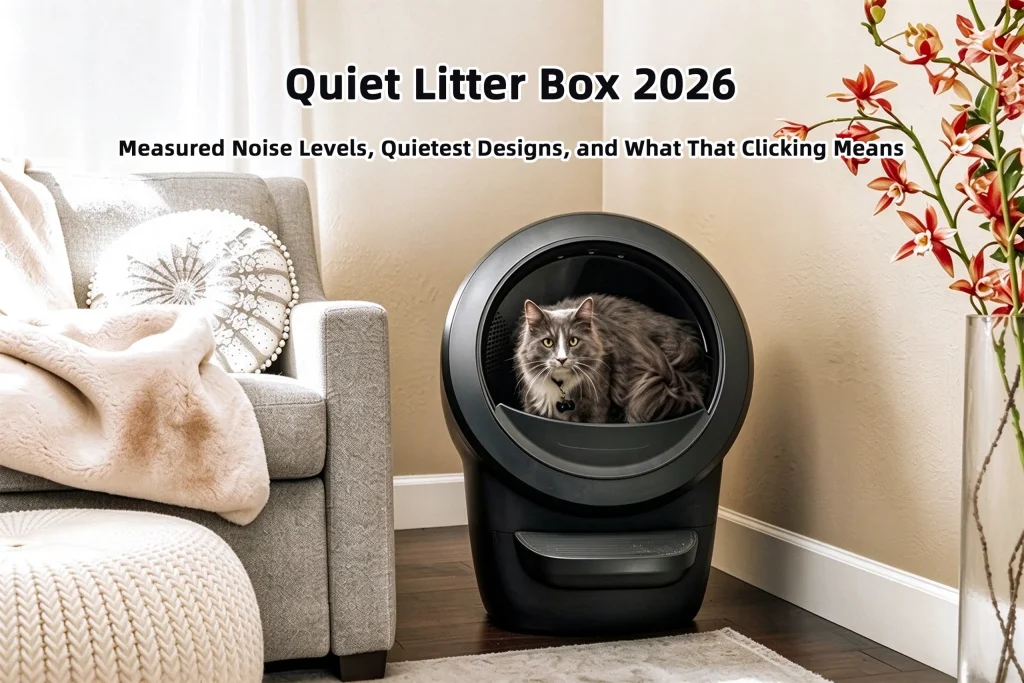
Gray cat resting inside a quiet litter box in a cozy living room demonstrating whisper quiet cat litter box operation

Pet Product Guides

10 Oct 2026

Quiet Litter Box 2026: Measured Noise Levels, Quietest Designs, and What That Clicking Means

Searching for a quiet litter box in 2026? Compare real measured dB levels, explore quiet cat litter box designs, and diagnose clicking or squeaking noises.
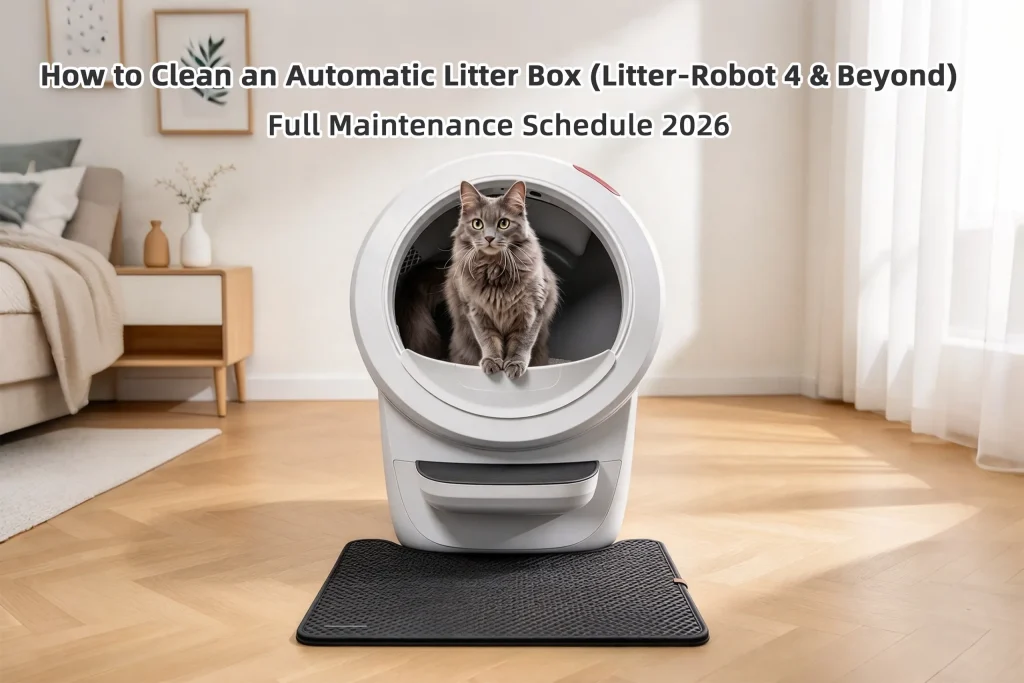
Cat sitting inside a Litter-Robot 4 illustrating how to clean an automatic litter box maintenance schedule

Pet Product Guides

9 Oct 2026

How to Clean Automatic Litter Box (Litter-Robot 4 & Beyond): Full Maintenance Schedule 2026

Learn how to clean an automatic litter box in 2026. Master Litter-Robot 4 deep cleaning, sensor care, enzyme sprays, and filter replacement on schedule.
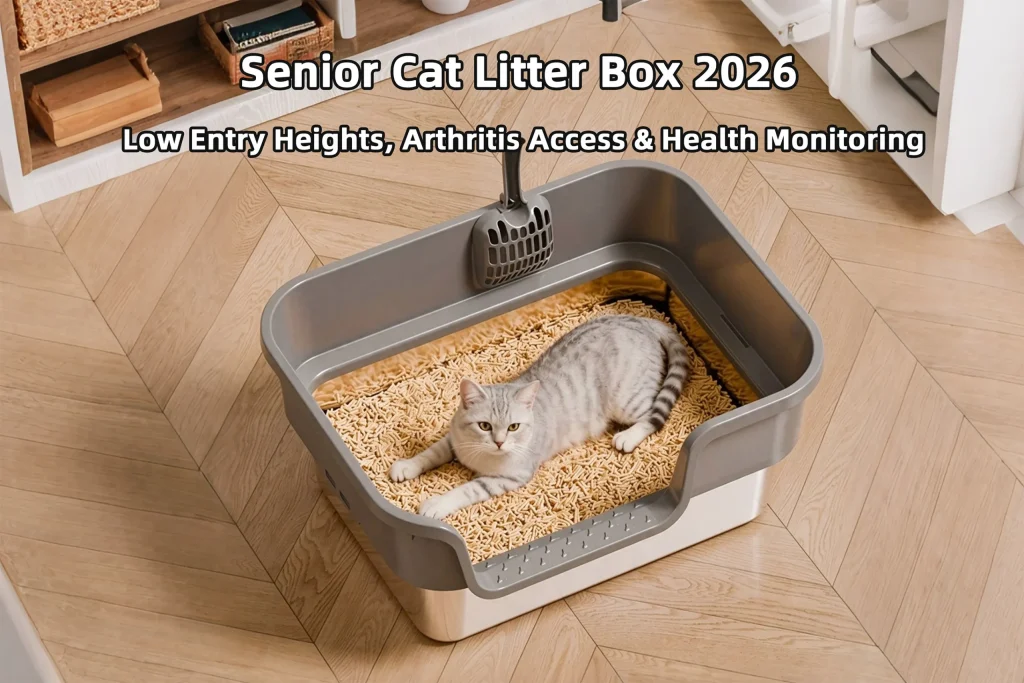
Senior cat resting comfortably in a low entry litter box for senior cats designed for easy arthritis access

Pet Product Guides

4 Oct 2026

Senior Cat Litter Box 2026: Low Entry Heights, Arthritis Access & Health Monitoring

Find the best senior cat litter box in 2026. Discover ideal low-entry heights for arthritis, when automatic boxes help, and health-monitoring benefits.

Contact Us

Send Your Requirements

Ask Factory Price

Get In Touch

Drag & Drop Files, Choose Files to Upload

Send Your Requirements Ask Factory Price

Let's have a chat

Send Your Requirements Ask Factory Price

Let's have a chat