Why Cats Prefer Running Water (And How to Actually Get Them to Drink More)

Wondering why do cats prefer running water? If your cat is drinking from the faucet, learn the sensory reasons why and how to fix it with the right fountain.

Why Cats Prefer Running Water (And How to Actually Get Them to Drink More)

Why do cats prefer running water?

Three overlapping reasons: running water is visually easier to locate (still water in a clear bowl is genuinely difficult for cats to see), auditorily detectable before they approach (they hear the drip before they see it), and instinctively associated with freshness over stagnation. That said — not every cat prefers running water, and buying a fountain doesn't guarantee increased drinking. The design of the fountain matters as much as the fact that it moves.

You watch your cat walk past a full, fresh water bowl and sit patiently on the bathroom vanity, staring at the faucet.

A side-by-side comparison of a cat ignoring a still water bowl and enthusiastically drinking from a running sink faucet, explaining why do cats prefer running water.

You turn the tap on. They drink immediately, enthusiastically, for a full thirty seconds. You turn it off. They sit and wait for you to turn it back on.

It’s one of the most reliably baffling cat behaviours — especially because there’s nothing visibly wrong with the water in the bowl. You just filled it. It’s filtered. It’s clean. And your cat would apparently rather wait ten minutes for a drip than lower themselves to drink it.

This guide explains what’s actually driving that preference — the visual biology, the instinctual wiring, and the sensory engineering — and then addresses the question most guides skip entirely: why do some cats ignore fountains even when they love the faucet, and what specifically needs to be true about a fountain for it to work.

Why Cats Prefer Running Water: The Three-Layer Explanation

The preference isn’t arbitrary, and it isn’t a personality quirk. It’s the product of three overlapping biological and instinctual factors — and understanding all three explains both why some cats are obsessed with the sink and why some cats ignore the fountain you bought to replace it.

Driver

What’s Happening

Design Implication

Visual resolution at the water surface

Cats’ foveal vision struggles with the perfectly flat, transparent surface of still water in a clear bowl — especially in bright kitchens where glare amplifies the problem. They paw at the water to create ripples that give them depth and location information.

Moving water: constant surface ripple solves the visual ambiguity passively. Bowl material matters too — white or opaque bowls with contrast lines at the waterline reduce the ambiguity even without movement.

Auditory location cue

Before approaching, cats use sound to locate and verify a water source. Still water is silent. A dripping faucet or a fountain spout is audible from the next room — which is why cats will walk to the kitchen in response to a running tap they haven’t seen.

A fountain’s acoustic signature should be consistent and low-pitched. High-frequency splashing sounds can be aversive. The ideal: a steady, soft trickle audible at 1–2 metres.

Freshness inference (instinctual, not analytical)

Cats don’t analytically test water chemistry. They use movement as a proxy for freshness — running water in the wild is more oxygenated and less likely to be contaminated than a stagnant pool. This is an evolved heuristic, not a conscious decision.

Water circulation matters even in a fountain context — a pump that moves water continuously is preferred over one that pulses intermittently. Oxygenation via a surface-break spillway adds a subtle freshness signal cats respond to.

It’s worth being honest about what the evidence actually is here. Vets and animal behaviourists widely agree on these three factors as the most likely explanation — they’re grounded in evolutionary biology and feline sensory research. But cats can’t tell us, and controlled studies on fountain vs bowl preference in domestic cats produce mixed results. Some research suggests the preference is real and meaningful; other data shows domesticated cats are perfectly willing to drink from still water when it’s the only option.

The practical takeaway: running water preference is real enough in a significant portion of cats to be worth designing for — but ‘gets a fountain’ doesn’t automatically equal ‘drinks more.’ The design of the fountain is what closes that gap.

Why Your Cat Taps the Water Bowl Before Drinking

This is one of the more misread cat behaviours. Owners usually assume it’s play, or anxiety, or a personality thing. It’s almost always functional.

An infographic showing how cats use paw ripples to break surface glare and see still water, explaining a common reason why a cat won't drink from a bowl.

Cats have excellent motion-tracking vision — they can detect a moving object at extremely low light levels. But foveal resolution (the fine detail vision needed to judge a flat, transparent surface) is significantly weaker than in humans. A perfectly still water surface in a glass or stainless bowl, particularly in a brightly lit kitchen where glare creates a mirror effect, is genuinely difficult for a cat to visually resolve.

The paw tap creates a ripple. The ripple breaks the flat surface into moving light patterns the cat can read instantly — depth, distance, and exact location. It’s not play. It’s a pre-drink sonar ping.

Cats whose owners switch them from clear plastic bowls to white ceramic bowls frequently report that the pawing behaviour decreases or disappears — even without adding movement. The high-contrast rim against the water surface gives cats the visual boundary information they were previously generating by tapping. Not a fountain solution, but a useful insight into what's driving the behaviour.

Whisker Fatigue: The Hidden Reason Your Cat Drinks Awkwardly

Cat whiskers aren’t decorative. They’re precision sensory organs — each embedded in a follicle dense with nerve endings that detect minute changes in pressure, airflow, and contact. They’re calibrated for spatial navigation, not repeated contact with bowl rims.

When a cat bends its head to drink from a narrow or deep bowl, the whiskers touch the sides on every sip. Each contact sends a neural signal. Over a short drinking session, those signals accumulate into genuine sensory overload — what vets call whisker fatigue. The cat experiences it as increasing discomfort that overrides thirst.

A 3D render comparing a deep bowl causing whisker fatigue cat stress versus a wide, shallow basin that encourages drinking.

The behavioural response is distinctive and often misread: the cat approaches the bowl, laps two or three times, then backs away. Returns in five minutes. Laps twice. Leaves again. Owners interpret this as the cat ‘not being thirsty’ or ‘being picky.’ It’s usually whisker fatigue — the cat is thirsty but the drinking experience is uncomfortable enough that they ration it.

The faucet solves whisker fatigue elegantly: the cat can position their mouth at the stream without any bowl rim contact at all. Whiskers are completely clear. This is a significant part of why faucet-obsessed cats often show such strong, enthusiastic drinking at the tap — it's not just the movement, it's the absence of whisker contact.

The Freshness Instinct: Why Still Water Feels Wrong

Cats are descended from desert-dwelling felids — the African wildcat (Felis lybica) — who evolved in environments where water was scarce and the quality of available water was variable. In that context, a moving stream or spring was reliably safer than a standing pool: better oxygenated, less contaminated, less likely to harbour bacterial growth or attract predators who also knew where the water was.

That instinct is still present in domestic cats, expressed behaviourally rather than cognitively. A cat sitting at the faucet isn’t thinking ‘this water is safer.’ They’re experiencing a pull toward the moving source that they don’t have the capacity to override by reasoning. It’s reflex.

Diagram explaining animal hydration instincts, showing why do cats like running water because it is perceived as fresh and oxygenated.

The practical consequence: a bowl that’s been sitting on the floor for six hours — gathering airborne dust, pet hair, and microscopic food particles — smells different to a cat than it did when you filled it. Cats have a sense of smell roughly fourteen times more sensitive than humans. They don’t need to see contamination to detect it. The still water starts signalling ‘stale’ before it looks stale to you.

What owners report

(community threads & forums, 2024–2026):

"My cat no longer drinks any water out of his bowl... only the sink now, and he begs us to turn it on when he wants some. It's cute, but is there no turning back now?"

— forum thread, AnandTech

"Some cats simply will not drink enough water from any standing source to adequately provide for their long-term health. These cats may come from a line whose long-ago wild ancestors lived in places with adequate sources of running water."

— forum response, AnandTech

"My cat did this without my knowledge until one time I woke up to a strange sound only to discover that we shared the glass on my nightstand."

— Instagram commenter on viral cat drinking video

The Counter-Intuitive Reality: Not Every Cat Prefers a Fountain

Here’s what most fountain buying guides won’t tell you: buying a fountain doesn’t guarantee your cat will drink more. For a meaningful proportion of cats, particularly older cats with established habits or cats with low baseline water intake, a fountain produces no measurable change in drinking behaviour.

Multiple vets and behaviourists acknowledge this directly. Dr Joanna Woodnutt, writing from eight years of clinical experience including work in a cat-only clinic: the preference for running water is real in many cats, but the evidence that all cats show it is mixed. Some studies of domesticated cats show no statistically significant preference for fountain water over bowl water.

There are also cats who are genuinely indifferent to water source as long as the water is fresh and accessible. These cats drink adequately from a clean bowl changed twice daily, and a fountain adds complexity without benefit.

The honest framing: a fountain is most likely to help if your cat is currently showing specific signals — faucet-seeking behaviour, pawing at bowl water, low daily water intake, or a history of urinary issues where hydration is clinically important. If your cat drinks reliably from a bowl and shows no faucet preference, a fountain is a nice-to-have, not a necessity.

When a Fountain Won't Fix the Problem

If your cat is barely drinking from the bowl, adding a fountain may not be the root issue. Cats who dramatically under-drink despite clean, available water should be seen by a vet — low intake can be a symptom of dental pain, nausea, or early kidney disease rather than a water source preference issue. A fountain is a hydration encouragement tool, not a medical intervention. Use it as one.

Why Cats Ignore Fountains Even When They Love the Faucet

This is the question the draft article touched on but didn’t fully resolve. Owner forums are full of the same frustration: ‘I bought a fountain because they’re obsessed with the sink. They’ve walked past it for three weeks.’

The issue is almost never that the cat doesn’t want running water. The issue is that the fountain fails to replicate the specific sensory conditions that make the faucet attractive. Most fountains are designed to appeal to human buyers — they look impressive, they have a tall, arching stream, they’re prominently displayed. Cats are not impressed by visual drama. They’re responding to a very specific set of sensory signals, and if the fountain gets any of them wrong, the cat simply doesn’t engage.

The Noise Problem

A faucet at low flow produces a very specific sound: a soft, consistent trickle. It’s familiar. It carries no threat signal. A cheap fountain with a vibrating plastic housing can produce a rattling buzz at a frequency that’s genuinely aversive to cats. Even a fountain that sounds acceptable to a human might be registering at a problematic level for a cat’s more sensitive hearing range.

The pump is also a long-term noise issue: a pump that’s clean on day one starts grinding at month three as calcium scale builds on the impeller. A cat that was using the fountain reliably stops using it — and owners assume the cat’s preference changed. The cat’s preference didn’t change. The fountain got loud.

→ Acoustic resonance and pump noise: TOP 7: Best Quiet Cat Water Fountain

Comparison between a stressful, noisy setup and a quiet, cat-friendly running water fountain for cats that prevents rejection.

The Whisker Problem at the Drinking Basin

Even a cat that approaches the fountain and investigates will abandon it permanently if the drinking basin is too narrow. Whisker contact on every sip triggers the same fatigue as a narrow bowl — and the cat makes a single association: ‘that object causes discomfort.’ They don’t try it again.

The basin width specification matters more than almost any other design variable for feline adoption. A wide, shallow tray with at least 2–3cm of clearance from the basin edge to where the cat’s face is positioned while drinking eliminates this failure mode completely.

The Placement Problem

Cats do not drink near their food. This is a behavioural carry-over from wild feeding patterns — in nature, a fresh kill near a water source is a contamination risk. Domestic cats retain this instinct: most will reliably avoid a water source placed within about 60cm of their food bowl.

This is also why the ‘cat bowls set’ design — matched food and water bowls sold together, placed side by side — has poor results for cats who are already under-drinking. You’re solving the wrong problem and reinforcing the placement that drives the behaviour.

A home floor plan illustrating the correct setup to separate food and water, showing owners how to get cat to drink more water by improving placement.

The single most impactful change many owners report for fountain adoption isn't the fountain brand — it's moving the fountain to a completely different room from the food. Suddenly the cat who ignored the fountain for two weeks starts using it daily. The fountain didn't change. The spatial relationship did.

What a Fountain Needs to Actually Work: The Design Specification

From a manufacturing perspective, the fountains that reliably get adopted by previously faucet-obsessed cats share six design properties. These are the things to evaluate before purchasing, not after.

Design Variable

Feline-Optimal Specification

What Goes Wrong Without It

Spout / flow architecture

Ramped wall-hugger or surface-tension spillway — water slides down a surface rather than free-falling through air

Free-fall open-drop spouts create splash noise and impact pressure cats find aversive. Wet nose and whiskers = abandoned fountain

Flow rate

Gentle, consistent stream — adjustable if possible, set to minimum to start

High-volume flow is intimidating for hesitant cats. Start slow; increase only if cat shows interest

Drinking basin width

Wide, shallow tray — whiskers should have 2–3cm clearance from basin edge while cat is drinking

Narrow basins cause whisker contact on every sip. Whisker fatigue causes complete fountain abandonment, even if the cat was using it

Pump noise profile

Below ambient room noise (~35dB) with no high-frequency rattling

A buzzing or grinding pump is the #1 reason cats that initially accept a fountain stop using it. The pump must stay clean

Basin material

Non-porous surface — 304 stainless steel or high-fired ceramic

Plastic develops micro-scratches that harbour biofilm and odour. Cats smell this before they drink and may associate the fountain with contamination

Fountain placement

Away from food bowl and litter box — ideally a separate room

Cats instinctively avoid water near food (contamination risk) and near elimination areas. Same-room placement is a primary reason fountain adoption fails

Engineering blueprint for an optimal feline hydration system, highlighting the features of the best water fountain for cats that drink from sink.

→ For specific model recommendations meeting these specifications: TOP 5: Best Stainless Steel Cat Water Fountain | → TOP 1: Best Cat Water Fountain (2026)

→ For cleaning requirements to keep the fountain appealing long-term: TOP 3: How Often Should You Clean a Cat Water Fountain
How to Transition a Faucet-Obsessed Cat to a Fountain

Cats are neophobic — they treat unfamiliar objects in their territory as potential threats until proven otherwise. A new, motorised device that buzzes, glows, and has moving water is not something a cautious cat will immediately trust. The transition needs to be gradual.

Timeline

Action

Why It Works

Days 1–3

Place the fountain unplugged, near their current water bowl

Eliminates the ‘new, noisy object in territory’ anxiety. Cat explores at their own pace. Do not force interaction.

Days 4–5

Plug in the fountain. Keep the old bowl available too.

Cat can choose. Most will investigate the fountain out of curiosity within 24–48 hours of it becoming active.

Days 6–7

Move old bowl gradually further from fountain (30cm per day)

Slowly makes the fountain the more convenient option without forcing an abrupt change.

Week 2

Remove old bowl if cat is using fountain consistently

Only remove it once you’ve seen independent, unprompted fountain use for at least 3 consecutive days.

Ongoing

Close bathroom door occasionally if faucet habit persists

Reduces access to the competing source; fountain becomes the path of least resistance.

Transition Tips That Actually Accelerate Acceptance

  • Rub a clean finger on the cat's cheek (picking up their scent) and wipe it on the fountain rim — familiar scent makes the object less foreign.
  • Drop a few pieces of their dry food into the water initially — curiosity about the food brings them to investigate the water.
  • Place the fountain on the floor at cat height, not elevated — cats are more cautious about drinking from elevated surfaces around unfamiliar objects.
  • Use the same water temperature as their current bowl — sudden changes in water temperature can cause temporary avoidance.
  • Never force interaction — placing the cat at the fountain, dipping their paw in, or blocking their access to old water creates negative associations that take much longer to reverse.

Frequently Asked Questions

Many do — but not all. Cats that show faucet-seeking behaviour, paw at bowl water, or have a history of under-drinking are most likely to increase intake with a fountain. Some research suggests cats drink 20–50% more from fountains than bowls; other studies show no significant difference. The honest answer is that it depends on the individual cat and critically on whether the fountain meets the specific design requirements (quiet pump, wide basin, correct placement) that make it preferable to a bowl.

The most common reasons: the pump is too loud (cats have sensitive hearing and a buzzing or grinding motor is aversive), the drinking basin is too narrow (whisker contact causes discomfort), the fountain is placed too close to the food bowl (cats instinctively avoid drinking near food), or the transition period was too short (cats need 1–2 weeks to accept a new object in their territory). Address placement and noise first — these resolve the majority of fountain adoption failures.

Three reasons overlap: the running water is visually easier to locate than still water in a bowl, the sound of the drip helps them find and verify the water source from the next room, and the faucet allows them to drink without any whisker contact with a bowl rim. Cats associate this combination with freshness and physical comfort. It becomes habitual quickly — the faucet provides a reliably better experience than the bowl, so they stop bothering with the bowl.

Provide a compelling alternative before restricting access. Set up a quiet fountain with a wide shallow basin in a location away from their food bowl. Allow 1–2 weeks of overlap where both the fountain and faucet access are available — let the cat choose. Once fountain use is established (3+ consecutive days of independent use), begin occasionally closing the bathroom door. Abrupt faucet removal before an alternative is established typically produces increased stress and doesn't resolve the behaviour.

Away from the food bowl — ideally a different room, or at minimum 60–90cm away. Away from the litter box. In a location the cat already uses and feels comfortable in. Low traffic, but not hidden — cats don't drink in locations they feel cornered or exposed. Ground level is best for initial introduction. If you have multiple cats, consider multiple water points in different locations — resource competition over a single fountain is a documented cause of under-drinking in multi-cat households.

Key signs: skin tent test (gently lift skin at the back of the neck — slow return indicates dehydration), reduced urination frequency or very dark/concentrated urine, dry or tacky gums, lethargy, sunken eyes. Chronic mild dehydration in cats is often subclinical — no obvious symptoms but contributing to long-term kidney and urinary health decline. If your cat is genuinely under-drinking, consult your vet before assuming a fountain will resolve it — low intake can be a symptom of an underlying health issue, not just a water source preference.

From Preference to Practice: Choosing the Right Fountain

Understanding why cats prefer running water is useful. But the design specification — what the fountain needs to actually deliver — is what determines whether the preference translates into increased drinking in your home.

The short version: quiet pump, wide basin, non-porous surface material, low-profile spout with no open-drop splash, placement away from food. Those five variables predict fountain adoption more reliably than brand, price, or filter specification.

ENGINEERING PERSPECTIVE

A Design Perspective on Feline Hydration Engineering

From a manufacturing standpoint, the gap between 'a fountain that moves water' and 'a fountain that cats reliably adopt' is entirely a design problem. The biology is fixed — cats have these sensory preferences, these whisker tolerances, these instinctual placement aversions. The only variable is whether the product is engineered to work with those constraints or in spite of them.

A wide-basin, low-noise, non-porous fountain placed correctly solves the faucet obsession for most cats within two weeks. A narrow-basin, buzzing, plastic fountain placed next to the food bowl will be ignored by the same cat — and the owner concludes that 'fountains don't work for my cat' when what's actually true is that this particular design didn't work.

Table of Contents

Like this article? Share on:

Latest Insights From Our Experts

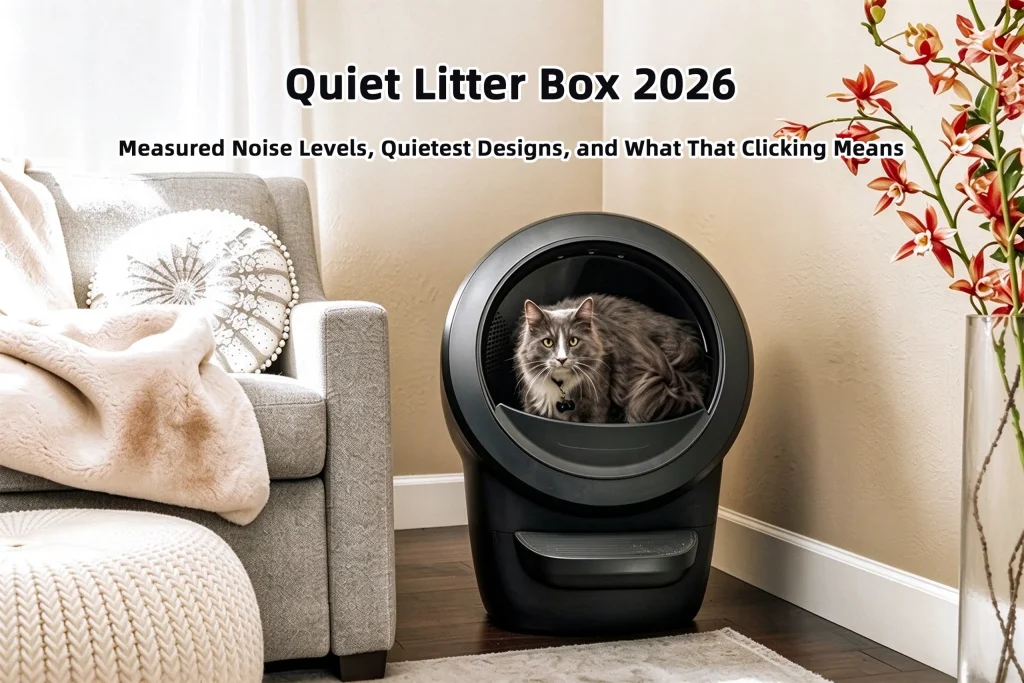
Gray cat resting inside a quiet litter box in a cozy living room demonstrating whisper quiet cat litter box operation

Pet Product Guides

10 Oct 2026

Quiet Litter Box 2026: Measured Noise Levels, Quietest Designs, and What That Clicking Means

Searching for a quiet litter box in 2026? Compare real measured dB levels, explore quiet cat litter box designs, and diagnose clicking or squeaking noises.
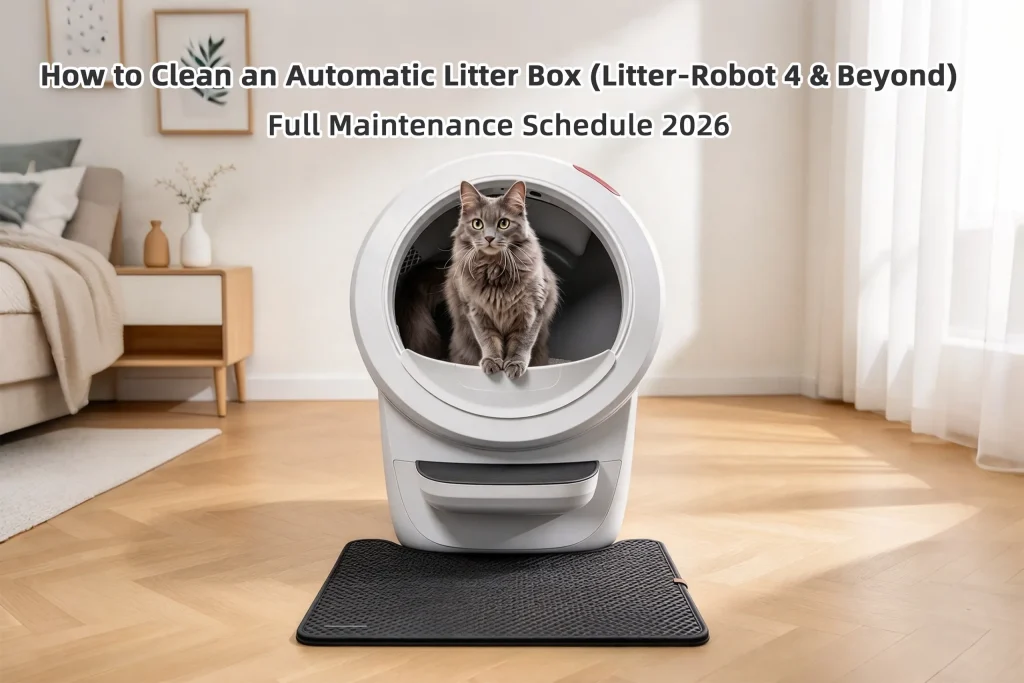
Cat sitting inside a Litter-Robot 4 illustrating how to clean an automatic litter box maintenance schedule

Pet Product Guides

9 Oct 2026

How to Clean Automatic Litter Box (Litter-Robot 4 & Beyond): Full Maintenance Schedule 2026

Learn how to clean an automatic litter box in 2026. Master Litter-Robot 4 deep cleaning, sensor care, enzyme sprays, and filter replacement on schedule.
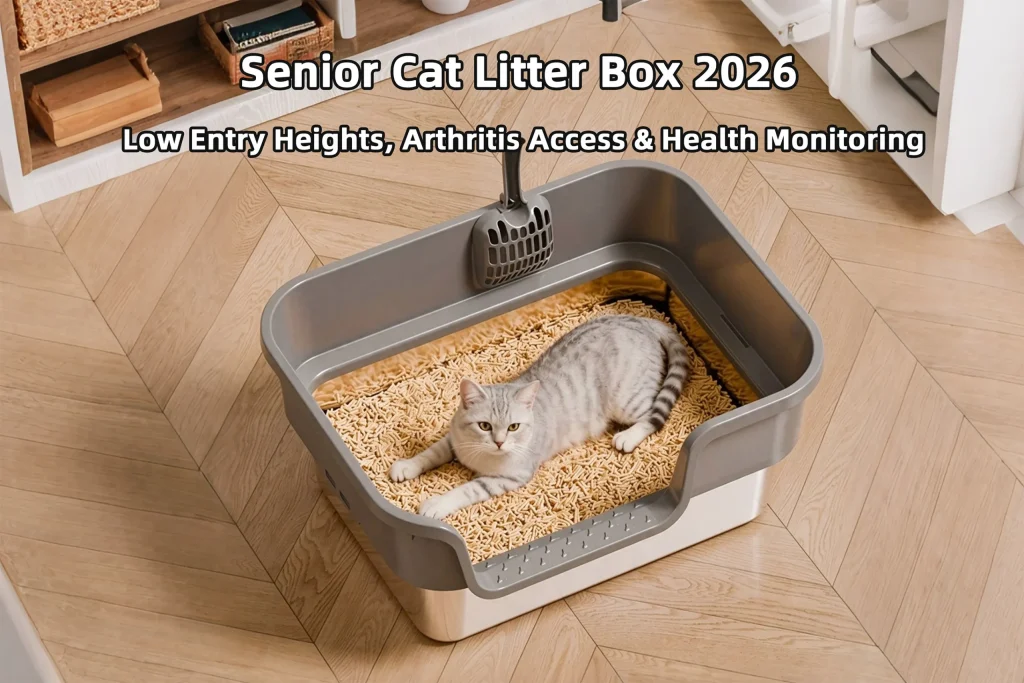
Senior cat resting comfortably in a low entry litter box for senior cats designed for easy arthritis access

Pet Product Guides

4 Oct 2026

Senior Cat Litter Box 2026: Low Entry Heights, Arthritis Access & Health Monitoring

Find the best senior cat litter box in 2026. Discover ideal low-entry heights for arthritis, when automatic boxes help, and health-monitoring benefits.

Contact Us

Send Your Requirements

Ask Factory Price

Get In Touch

Drag & Drop Files, Choose Files to Upload

Send Your Requirements Ask Factory Price

Let's have a chat

Send Your Requirements Ask Factory Price

Let's have a chat